


On 7 May, Telefónica organised a new meeting in Brussels as part of its Telefónica Policy Lab initiative, a space for open dialogue designed to foster joint reflection on the major challenges facing European digital policy. The event was opened by Idoya Arteagabeitia, Telefónica’s Chief Regulation, Public Policy and Competition Officer, who shared some initial thoughts on the current geopolitical context and the challenges facing Europe in terms of competitiveness and digital sovereignty.
The debate then began with contributions from Pilar del Castillo, Member of the European Parliament, and representatives of the European Commission: Lucrezia Busa and Miguel González Sancho, from the Directorate-General for Communications Networks, Content and Technology (DG CONNECT); and Darío García de Viedma, from the Elcano Royal Institute. The discussion was moderated by Gonzalo López-Barajas, Head of the Corporate Regulation Unit at Telefónica, who facilitated an open exchange between representatives from various Member States, European institutions and other stakeholders in the digital ecosystem.
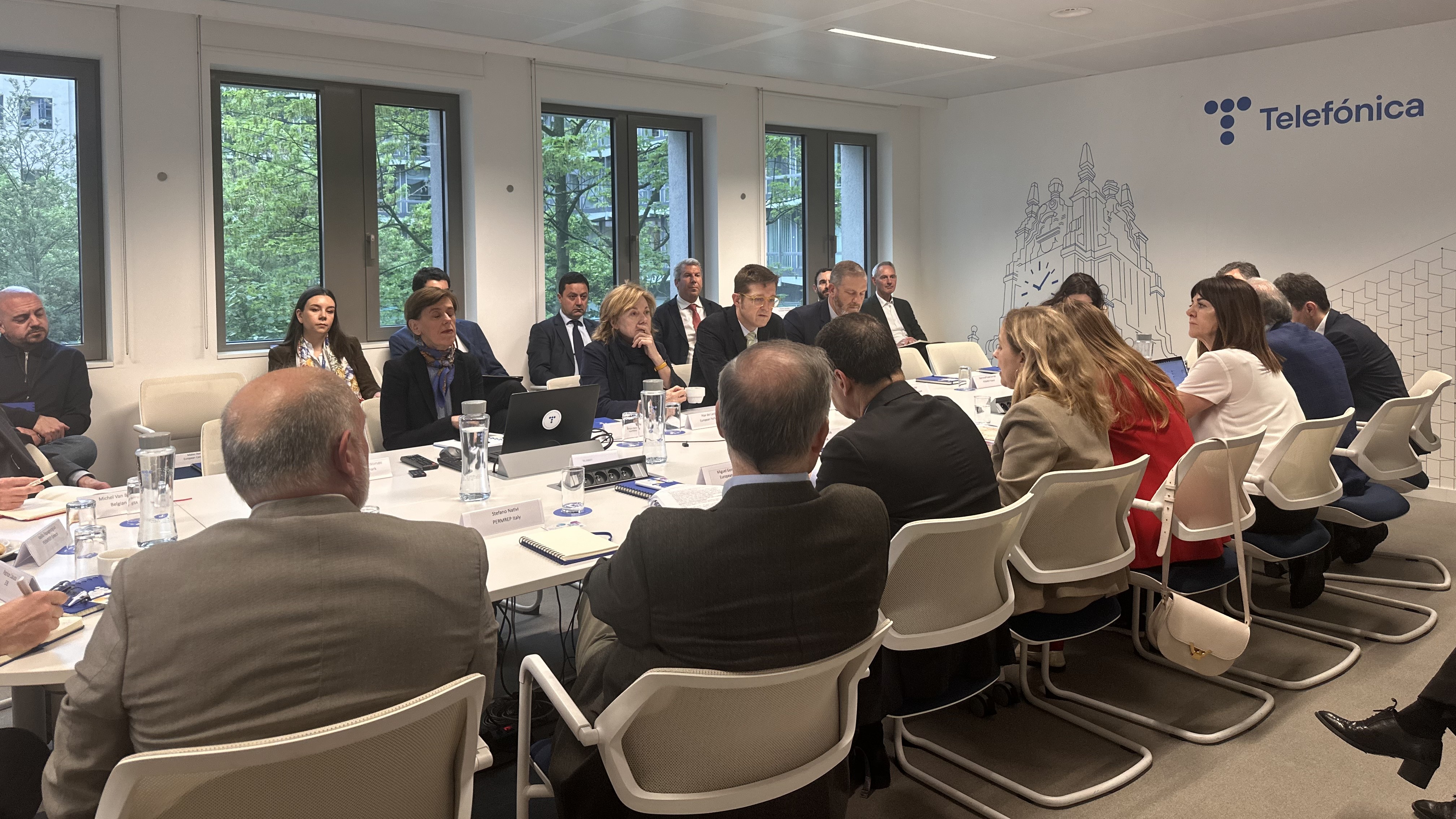
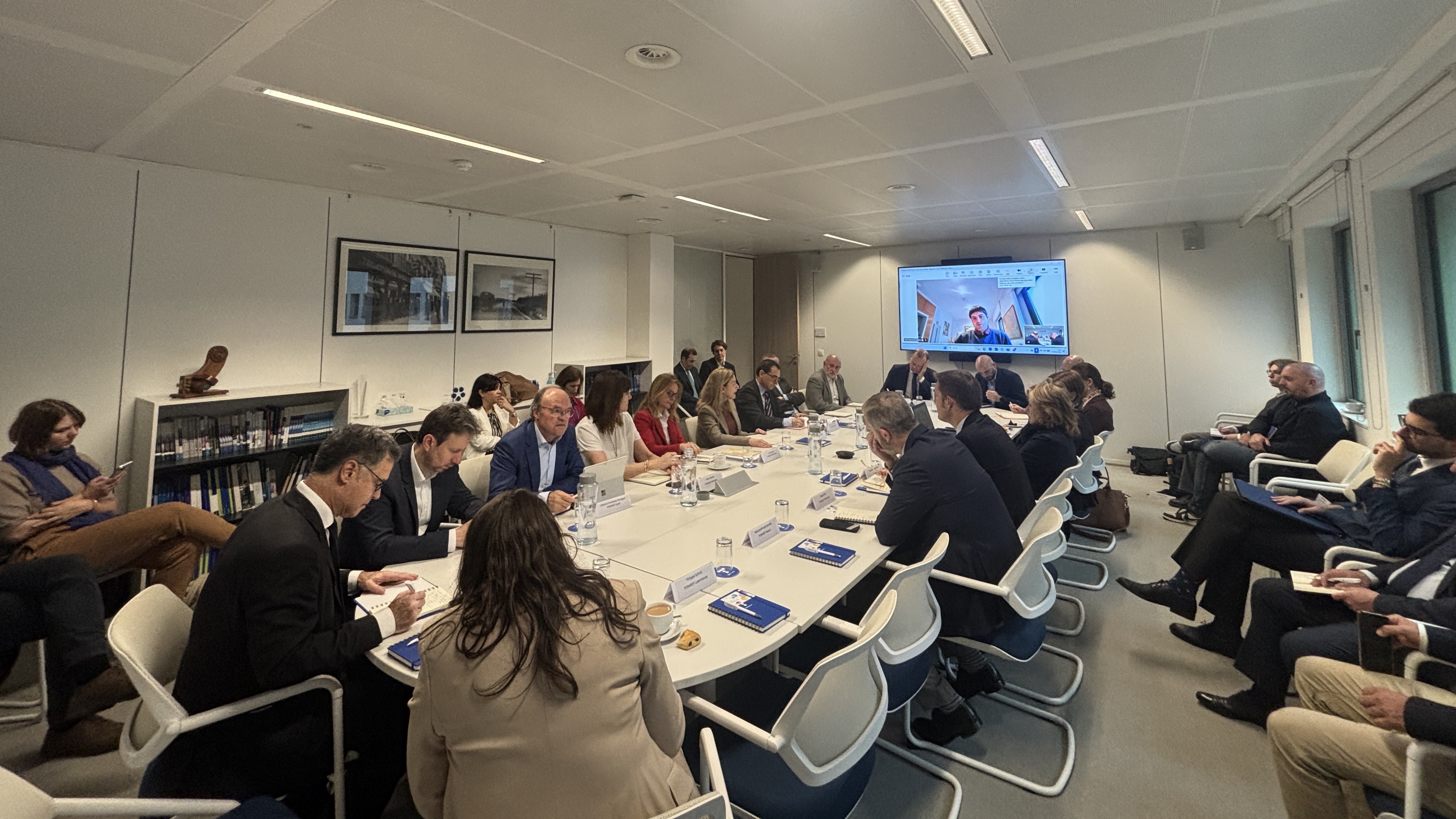

The debate centred on three themes: the role of connectivity as a key enabler of competitiveness and innovation; the need to strengthen investment capacity and scale in Europe across strategic sectors such as telecommunications; and the importance of moving towards a more coherent, proportionate and investment-oriented regulatory framework to address the competitiveness challenges facing the European digital economy in a constantly evolving and increasingly demanding geopolitical and technological environment.
In this context, one of the key takeaways from the debate was that Europe is at a turning point. Growing global technological competition, coupled with the emergence of new strategic dependencies, is accelerating the need to rethink Europe’s role in the global digital economy. Strengthening the capacity to compete, innovate and act with greater autonomy has therefore become a key priority.
Connectivity emerged as a fundamental pillar of this discussion. Beyond its role as infrastructure, its function as the foundation upon which the entire digital ecosystem is built was highlighted. From artificial intelligence to the cloud, data centres and advanced networks, the development of strategic technologies depends on the existence of robust, resilient networks capable of supporting this transformation.
Competitiveness was another major theme of the discussion. Participants agreed that Europe needs to strengthen its investment capacity and overcome some of the structural challenges that continue to limit the growth of the digital ecosystem, such as market fragmentation, difficulties in scaling up innovative companies, or access to funding at certain stages of development.
In particular, the need to bridge the investment gap in emerging technologies and to build a more robust ecosystem—capable of bringing together major industrial players with dynamic start-ups and channelling the region’s talent—was highlighted. The ability to scale up, attract capital and develop larger-scale projects was identified as a key element in improving Europe’s position in the global digital economy.
In this context, the importance of having an environment that fosters innovation and entrepreneurship was also highlighted, as well as the need to promote demand for the adoption of digital solutions. All this whilst maintaining a balance between openness and strategic autonomy, avoiding protectionist approaches but strengthening domestic capabilities where necessary.
The debate also addressed the evolution of the European regulatory framework, with particular attention to the Digital Networks Act. There was a shared view on the need to move towards a regulatory environment that supports the sector’s transformation, drives investment and facilitates the roll-out of digital infrastructure and the development of innovative products and services.
In this context, regulatory simplification was highlighted as a cross-cutting priority. A more coherent, clear and proportionate framework is considered essential to reduce complexity, increase legal certainty and enable the entire ecosystem to innovate and compete under better conditions.
The discussion also addressed the issues of cybersecurity and resilience, which are becoming increasingly important in an environment characterised by growing technological interdependence. The protection of critical infrastructure and the ability to respond to risks and vulnerabilities are now at the heart of the debate on European digital sovereignty.
Throughout the discussion, it also became clear how these interdependencies can give rise to new power dynamics and potential points of pressure in certain technological areas, reinforcing the need for Europe to strengthen its capabilities in strategic areas of the digital ecosystem.
Overall, the discussion reflected a shared view: Europe’s challenge is no longer so much to define its digital ambition, but to put in place the necessary conditions to make it a reality. Competitiveness, investment, regulation, talent and ecosystem development are all part of the same equation that Europe must address in a coherent manner.
This meeting forms part of the Telefónica Policy Lab, an initiative through which Telefónica seeks to contribute to the European debate through constructive dialogue and the exchange of perspectives. During the event, Telefónica also presented the second edition of the Public Policy Playbook, which sets out the company’s vision on the key digital and technological debates that will shape Europe’s digital future and puts forward proposals to help design public policies that foster a more competitive, innovative, sustainable and inclusive Europe.