
In my day-to-day work in project management, there’s something I’ve internalised quite a bit: if you don’t define the objective well, if you don’t measure, and if you don’t follow up, it’s very difficult to get where you want to be.
For a long time I saw it as something purely professional. But there came a point where I asked myself: What if I applied everything I do at work to sport? What if I were to treat my preparation as if it were just another project?
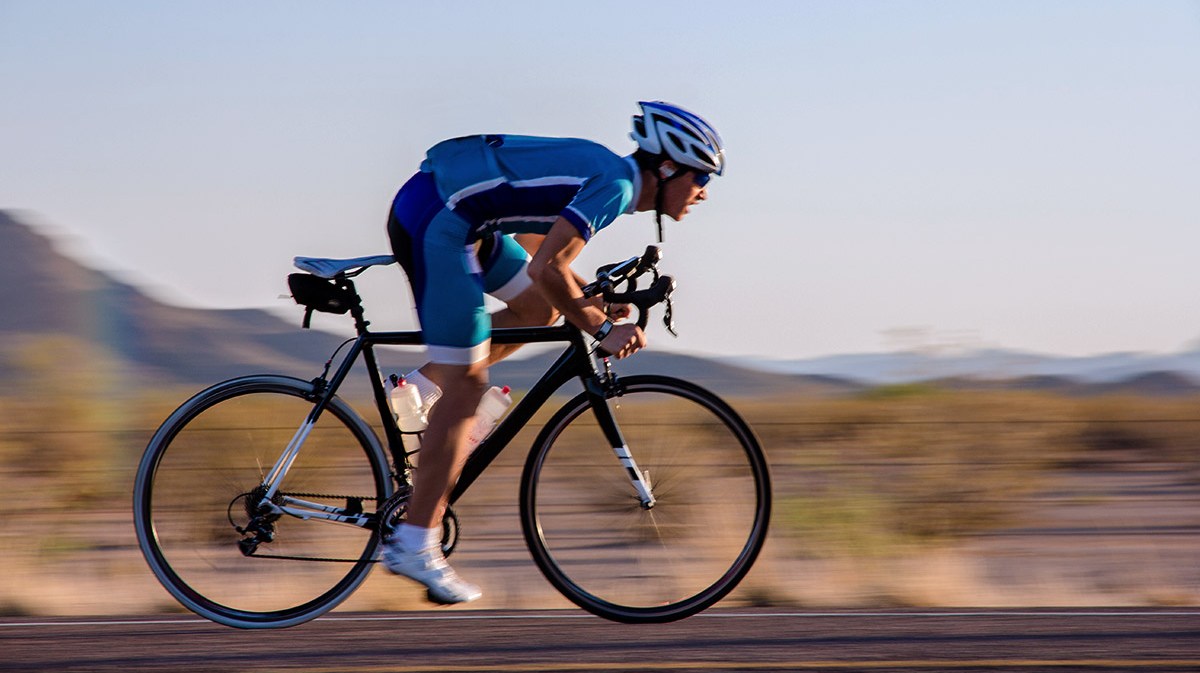
The answer began to take shape by preparing for The Millars UCI Gran Fondo World Series, a 156 km race with more than 2,000 meters of elevation gain, which was held on 22 March.
What does it mean to be a PMO?
When someone asks me what I do as a PMO, it’s often difficult to explain in one sentence. It’s not just about tracking projects or coordinating tasks.
For me, being a PMO is about constantly connecting the dots. It’s about taking a goal that sometimes sounds very abstract and boiling it down to something concrete: what needs to be done, when, with what resources, and how we know if we’re on the right track.
In everyday life, that means bringing order to chaos. Prioritising when everything seems urgent. Detecting problems before they explode. And, above all, helping to make things happen.
Over time you realise that it’s not just about methodologies or tools. It’s about having a way of thinking: structuring, measuring, adjusting, and starting again.
From the office to sport: applying the PMO mindset
When I started preparing for the race, I decided to do it the same way I manage a project.
The first step was to define what I wanted to achieve. “Doing well” wasn’t enough. I needed something concrete: to finish among the first 60 participants out of a total of 2,000.
From there, I organised the preparation in phases. I planned training blocks, measured how I was progressing, and above all, adjusted my strategy on the fly when something wasn’t going as expected.
The result was an improvement of approximately 20 minutes compared with the previous year and a 31st position overall, enough to qualify for the 2026 UCI Gran Fondo World Championships in Japan.
The power of data: measuring to improve
If there’s one thing I’m sure of, it’s that what isn’t measured, can’t be improved.
This is obvious at work, but it’s even more so in sport. I started relying heavily on data: power, weight, training load…
In my case, working with metrics like FTP or W/kg ratio allowed me to clearly see the evolution:
- FTP: about 280 W to 310 W
- Weight: from 75 kg to 71 kg
- W/kg ratio: from 3.7 to 4.4
Beyond the numbers, what matters is what you do with them. Adjust, try it out, make mistakes, and readjust. Exactly the same as in any project.
Time management and discipline
One of the most difficult parts was fitting everything in with work.
This is where I have most noticed what my day-to-day work as a PMO has contributed to my development. Knowing how to prioritise, being well organised, and being quite disciplined with my times.
It’s not always easy, but when you have a clear goal, you eventually find the gaps. And that consistency, little by little, makes all the difference.
Ultimately, it’s not about having more time, but about managing the time you have better.
Managing uncertainty
Neither in projects nor in sport does everything go perfectly.
There are always unexpected events: bad days, changes of plan, even falls, like what happened to me in the race. And that’s where mindset really comes into play.
Instead of getting frustrated, I tried to do the same thing I do at work: analyse, adjust, and keep going.
Because if there’s one thing I’ve learned, it’s that getting sidetracked is part of the process. What matters is how you react.
Next challenge: the World Cup in Japan
With the qualification achieved, a new phase now begins: preparing for the UCI Gran Fondo World Championship in Japan.
And I’m going to approach it in exactly the same way. Clearly define the next milestones, structure the preparation in blocks, continue measuring each progression, and optimise everything possible.
In the end, it’s the same old story: same approach, new goals.
Project management and high performance: key lessons
If there’s one thing I take away from this whole experience, it’s that many of the skills we develop at work are useful for much more.
Planning, measuring, being consistent, adapting… all of that doesn’t stay in the office.
In my case, bringing that mindset to sport has helped me improve more than I expected.
And in the end, it all boils down to something quite simple: treat each goal as a project. With method, with common sense… and with the eagerness to do a little better each day.