

A forum connecting technology decisions with their social impact
How can Europe turn its digital ambition into real capability? This question brings together two major themes at the annual IGF Spain conference: Europe’s ability to develop and control strategic technologies, and the implications of their use for people. Digital sovereignty, cloud computing and the artificial intelligence race featured alongside cybersecurity, disinformation, the protection of minors and platform responsibility.
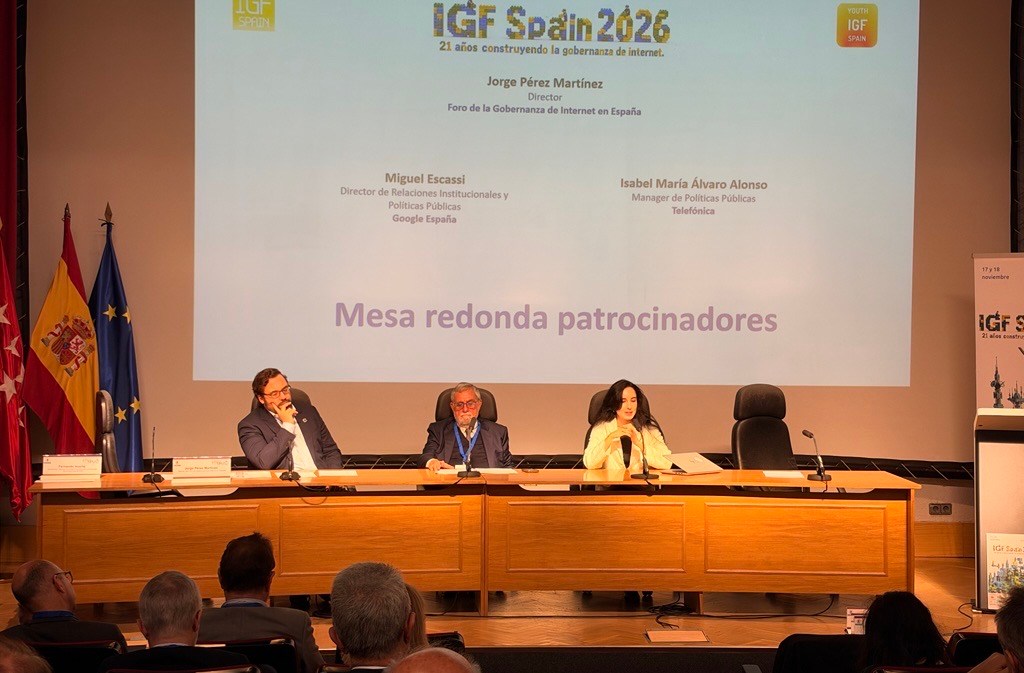
Telefónica took part in the forum, held on 17 and 18 November, addressing autonomy, dependency and competitiveness in cloud computing. A shared vision emerged: Europe needs to turn its technological assets into industrial capabilities and competitive services, without compromising openness or freedom of choice. From our perspective, the response requires connecting technological capabilities with investment and with the services that businesses, public administrations and citizens need.
Telecommunications: a strategic asset for Europe
Against a backdrop of geopolitical and technological rivalry, Europe must strengthen its competitiveness, foster innovation and reinforce its security and defence capabilities. To achieve this, the telecommunications sector is a strategic ally.
In terms of innovation, Telefónica is working along three axes: evolving the network; developing new capabilities, such as edge cloud nodes, network slicing and private networks; and integrating and deploying new technologies, such as artificial intelligence and quantum technology. Initiatives such as Euro 3C and satellite cooperation illustrate the value of partnerships in driving new services and strengthening Europe’s technological and business ecosystem.
Realising this potential requires sustained investment. In this context, three key priorities were identified: a regulatory framework adapted to the sector’s challenges, simpler and more harmonised rules, and greater business scale to help finance innovation and the deployment of new networks.
What does cloud sovereignty mean?
Businesses and public administrations use the cloud to store information, run applications and deploy artificial intelligence services. Their ability to make decisions about these resources has implications for service continuity, security and competitiveness.
At Telefónica, we understand technological sovereignty as the ability to choose between genuine alternatives, control critical functions and switch providers when necessary. This approach allows European capabilities to be combined with technology from trusted international partners, provided that these partnerships bring investment, knowledge and effective control to Europe.

Left to right: Hernán Rodríguez, Technology Analyst and Commentator; Gonzalo Conde, Head of Public Policy at Telefónica; María Álvarez, Head South Europe and Emerging Markets – Government Affairs and Cloud GAAP EMEA at Google; Emilio García, Public Policy Analyst for Digital Transformation
This is the vision set out in our position on technological sovereignty: developing our own capabilities, diversifying supply chains and maintaining open cooperation with trusted partners. Levels of autonomy and control should reflect the criticality and risks of each service.
Turning European infrastructure into a competitive offering
Europe has networks, data centres, talent, industrial expertise and close relationships with businesses and public administrations. The challenge is to connect these assets and turn them into competitive services at European scale.
Current dependency highlights the scale of the challenge. According to 2024 data from Synergy Research Group cited in our analysis of cloud computing and artificial intelligence, European providers accounted for around 15% of the European cloud infrastructure market, compared with nearly 70% held by three major US providers.
The discussion highlighted the contribution of operators and Edge Cloud, which brings data processing closer to where data is generated. This distributed infrastructure can reduce response times and strengthen resilience and control over data.
These priorities are reflected in our proposals for the forthcoming European legislation on cloud computing and artificial intelligence, CADA. Its success should be measured by the investment mobilised, capacity deployed, diversity of providers and uptake of services. To this end, we advocate verifiable and proportionate requirements, recognition of distributed infrastructure and public procurement that helps develop a competitive European offering.
Trust is also part of digital capability
Digital competitiveness requires trust. The protection of minors, the fight against disinformation and the security of services are prerequisites for sustainable technology adoption. The forum’s programme underscored that the technology debate includes issues that directly affect everyday life: the protection of minors, disinformation and the security of digital services.
At Telefónica, we connect these challenges with a people-centred digital transformation. Our responsible artificial intelligence principles incorporate transparency, privacy, security, fairness and environmental commitment as foundations for developing and using this technology.
The participation of different stakeholders in forums such as IGF Spain makes it possible to compare needs and bring technology decisions closer to their social consequences. Maintaining this dialogue is essential to building solutions that generate trust and opportunities.
From ambition to capabilities
Europe’s challenge is to deliver on its digital ambition: mobilise investment, enable scale, simplify rules and turn innovation into capabilities and services that compete globally. Our participation in IGF Spain 2026 reflects a priority: creating the conditions for Europe to invest, innovate and have competitive technological alternatives. Progress requires businesses with scale, simpler rules, collaboration and a shared vision of the capabilities we need to develop.
Telefónica is taking on the challenge of becoming the best gateway to digital technologies for citizens, businesses and public administrations. Contributing to European technological sovereignty is part of this commitment, bringing innovation closer to those who need it and strengthening their ability to shape their digital future. e.