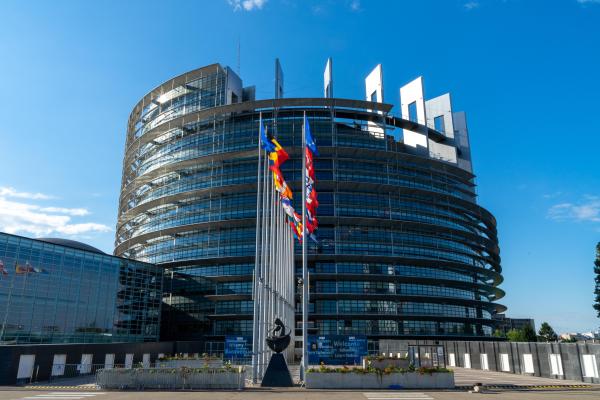

The roadmap is built around five key levers designed to turn the Single Market into a genuine driver of European competitiveness:
1. Simpler regulation, reducing unnecessary burdens and making it easier for businesses to operate and invest.
2. A more integrated Single Market, capable of removing barriers and making better use of Europe’s scale.
3. A more ambitious trade policy, strengthening Europe’s position in an increasingly competitive global environment.
4. More affordable and cleaner energy, enabling progress towards decarbonisation without compromising competitiveness.
5. A more digital Europe, accelerating technological transformation and unlocking the full potential of artificial intelligence.
The telecommunications sector is a strategic partner in strengthening the digital dimension of the Single Market. Telecommunications operators not only provide the infrastructure that underpins Europe’s productive and technological capacity, but also act as providers of digital services and innovation.
With the hope of helping contribute to the “One Europe, One Market” goal, Connect Europe, the association of European telecom operators of which Telefónica is a member, has published a position paper outlining the sector’s proposals.
A Single Market for Telecommunications
To build high-capacity, resilient European digital infrastructure, Connect Europe identifies three priorities: 1. A more predictable, harmonised and simplified regulatory framework that reduces fragmentation; 2. Greater efficiency and scale through the centralisation of certain infrastructure operations; and 3. More investment and innovation, enabled by operators with the scale needed to support Europe’s digital transformation.
First, telecommunications regulation is characterised by its sector-specific nature and by uneven implementation across Member States. This fragmentation undermines the goal of Single Market integration and, in turn, weakens Europe’s digital and technological competitiveness. Spectrum policy, consumer regulation and Open Internet rules are clear examples where greater harmonisation and regulatory simplification are needed to encourage investment.
Second, telecommunications continue to have a strong local dimension. However, virtualisation and cloud technologies create new opportunities to advance towards a European Single Market in certain layers of digital infrastructure. Nevertheless, cross-border barriers and fragmented national rules continue to hinder deeper integration, including requirements related to lawful interception, data retention, civil engineering permits, local data storage obligations and other regulatory constraints.
Finally, the sector requires substantial and continuous investment in high-capacity networks, technology and R&D. To make these investments sustainable, operators need to achieve sufficient scale. However, the current regulatory and competition framework, which is primarily focused on lowering prices, has limited industry consolidation and constrained the sector’s investment capacity.
Telefónica’s Proposal for the Single Market
The benefits of the Single Market for European citizens and businesses are undeniable. It has been one of the European project’s greatest achievements, fostering wealth creation, strengthening competition and enhancing the global competitiveness of European companies.
To continue advancing and fully unlock the potential of this European endeavour, Telefónica proposes action in two key areas. Firstly, promoting regulatory simplification and harmonisation, ensuring that additional layers of regulation do not create further complexity and fragmentation across markets. Secondly, reviewing competition policy to support more sustainable market structures at the national level. Greater scale would help create a more sustainable environment for investment and innovation while accelerating the deployment of next-generation, high-capacity networks.
Telefónica’s message is clear: Europe does not need additional layers of regulation, but rather a simpler, more harmonised and investment-friendly framework. Only with strong operators that have sufficient scale will it be possible to accelerate innovation, roll out next-generation networks, and strengthen Europe’s competitiveness and digital autonomy.