

Quantum technologies have moved from theoretical promise to strategic necessity. The stakes for Europe are clear: it is no longer just about scientific leadership, but about digital sovereignty, resilience, and competitiveness.
While the EU is home to roughly 32% of global quantum companies, a structural gap remains. Europe accounts for only 6% of global quantum patents, contrasted with China’s 46% and the US’s 23%, and attracted a mere 5% of global private capital in 2024, while 50% flowed to the US.
The Role of Industry: Telefónica as a Trusted Partner
Telefónica’s early engagement in quantum technologies positions it at the forefront of preparing for both the risks and opportunities of the quantum era. Telefónica has established a dedicated Centre of Excellence for quantum technologies. The company is already making strides towards quantum-safe networks and services by integrating an additional layer of protection through quantum-resistant technologies, combining traditional cryptographic methods with post-quantum cryptography (PQC).
Going beyond the lab, Telefónica is also advancing future technologies such as Quantum Key Distribution (QKD), having deployed them operationally within the EuroQCI network, to accelerate their maturity. And Telefónica has recently launched ‘Interconexión CPDs’, Spain’s first data-centre communications service secured with post-quantum cryptography and supporting quantum key distribution (QKD) technology.
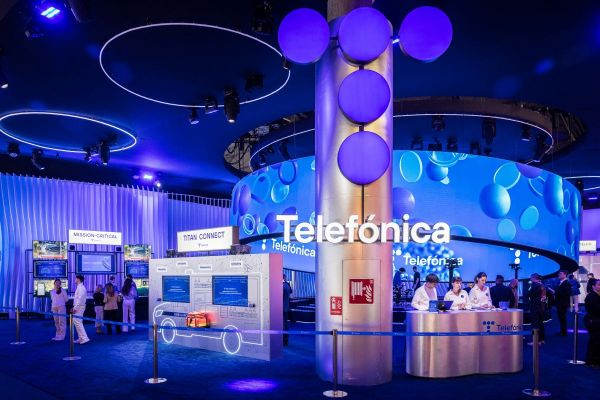
Overall, Telefónica works closely with a broad range of third-party partners, integrating them into a robust quantum ecosystem. For example, several use cases were showcased at MWC25, including partnerships with quantum computing manufacturers and a range of collaborations, such as with the Provincial Council of Biscay, or the creation of the Javier Echenique Talent and Technology Centre in Bilbao.
A decisive moment for Europe’s quantum ambitions
The EU has invested over €2 billion in quantum, among the largest public efforts globally, yet funding remains fragmented, limiting scale-up and industrial impact. Set for adoption in 2026, the European Quantum Act seeks to bridge Europe’s scientific strength and industrial capacity by accelerating deployment and strengthening resilience across the quantum value chain.
Its added value lies in streamlining governance, reducing fragmentation between EU and national initiatives, and better leveraging instruments that attract private investment. The key challenge is not a lack of tools, but improving their coordination, accessibility, and alignment with deployment needs.
The Dual Nature of the Quantum Revolution
Quantum computers are uniquely suited to simulate quantum mechanics itself – a vision first articulated by Richard Feynman more than 45 years ago- and a task that classical computers fundamentally struggle to perform. By following the same rules as nature, quantum computers can directly model many interacting, entangled particles and outperform classical computers. This makes quantum simulation one of the most economically important applications of quantum computing, with transformative potential for pharmaceuticals, batteries, photovoltaics, advanced materials, and chemistry, most probably delivered as cloud-based services. Other relevant areas include secure communications and advanced sensing technologies.
At the same time, quantum computing introduces profound risks. Powerful quantum machines could break much of today’s public-key cryptography, which underpins secure internet communications.
Scott Aaronson noted in a recent interview, major advances in qubit accuracy and error correction and he joked about the roughly $200 billion “bounty” sitting in early Bitcoin wallets, waiting for whoever builds the first powerful quantum computers capable of cracking cryptographic keys. That anecdote underscores a critical reality: the threat quantum computing poses to global security is no longer a speculative future scenario, but an immediate strategic priority.
The Quantum Act and the security paradox
Quantum computing creates a security paradox. As a result, Europe’s Quantum Act must fully integrate technologies related to cryptographic protection such as post-quantum cryptography (PQC) alongside Quantum Key Distribution (QKD), enabling hybrid architectures that combine classical and quantum approaches. This technologically neutral transition, aligned with the European Roadmap on Post-Quantum Cryptography, and expected to begin deployment in 2026, is essential to ensuring secure, interoperable, and future-proof digital infrastructures.
The success of the Quantum Act will depend on how holistically Europe approaches the quantum challenge. One lesson is already clear: the Quantum Act cannot be developed in isolation from the cryptographic disruption triggered by quantum computing.
Pillar 1. Research & Innovation Framework: Turning public funding into an industrial catalyst
The EU should stay at the forefront of emerging quantum and related technologies, especially quantum sensing, security, and communications, by shifting public funding beyond basic research toward deployment, scaling, and market uptake. This requires stronger links between research and industry, including support for higher-TRL projects, joint industry–academia R&D, and initiatives aligned with venture capital and startup ecosystems (e.g. Wayra: video on 2026 quantum trends from the startup ecosystem and Telefónica)
The framework should prioritise infrastructure and technologies where Europe has clear competitive strengths, promote international cooperation, and strengthen technology transfer through direct company participation and dedicated support for standardisation, IP valorisation, and deep-tech ventures. The Quantum Flagship should retain a central role within the Quantum Act as the EU’s core platform for scientific excellence, industrial maturity, and coordinated investment.
Pillar 2. Industrial capacity & investment, made in the EU: From labs to real-world impact
The EU should provide long-term support for quantum communications and computing through public–private investment schemes, including industry-led consortia, simplified IPCEIs, and strategic security bonds. Funding must extend beyond R&D to cover pilots, testing, certification, and the deployment of secure quantum infrastructures, as existing co-financing models are often inadequate for high-capital technologies.
The Quantum Act should therefore allow higher aid intensities, following precedents such as broadband rollouts, and establish dedicated programs (e.g aligned with EuroQCI), with increased public co-financing for cost-intensive infrastructure. Incentives for adoption and coordinated, innovation-driven public procurement prioritising European technologies are also essential to strengthen Europe’s digital sovereignty, secure communications, and digital autonomy.
Pillar 3. Supply-chain resilience & governance and skills
The EU should support European quantum-safe infrastructures, computing, resilient communications, and sensing, while securing critical components. Quantum-safe deployment must be interoperable at EU level, and the Quantum Act should cover both quantum and enabling technologies such as post-quantum cryptography (PQC).
Standardisation, European-owned IP, and fair licensing are essential to a competitive and sovereign ecosystem, alongside strong participation in global standards bodies. Skills and talent should be a horizontal priority, with sustained support for training, reskilling, and specialised expertise, particularly in post-quantum security.
From strategy to growth: A holistic vision for Europe’s quantum future
The Quantum Act is a test of Europe’s capacity to respond strategically to technological disruption. Its success will depend less on ambition than on pragmatic organisational and financial design. By adopting a holistic approach, integrating quantum and related technologies, aligning with post-quantum cryptography roadmaps, and closing the gap between research and deployment, Europe can turn quantum risk into opportunity. Aligning funding with deployment realities, using innovative financing, and leveraging public procurement will be key to moving from strategy to growth.
Ultimately, security, resilience, and competitiveness are inseparable. The Quantum Act can ensure that quantum and cryptographic technologies are not only developed in Europe, but also deployed, scaled, and monetised, strengthening Europe’s sovereignty and competitiveness.