
In December 2015, the United Nations designated 11 February as International Day of Women and Girls in Science, with a clear aim: to highlight the role of women in science and to encourage young people to pursue careers in the field from an early age.
Ten years on, the landscape has changed. Technology has become integrated into every aspect of our lives, artificial intelligence is redefining entire industries, and scientific thinking is more necessary than ever.
And yet, there is one thing that remains surprisingly constant:
the low representation of women in most STEM disciplines.
More than just an acronym: a question of opportunities
STEM—which stands for science, technology, engineering and mathematics—goes beyond a set of disciplines. It is the language upon which the present is built… and, above all, the future.
And increasingly, this approach is expanding into STEAM, incorporating the arts as a driver of creativity, design and critical thinking.
It is found in how new therapies are developed, in how more sustainable cities are designed, in how digital experiences are created, and in how millions of people connect every day.
But it is also found in something more fundamental: in the ability to ask questions, analyse problems and devise solutions.
In my case, I didn’t start out with a clear vocation for technology. It was something I discovered over time, as I came to understand how decisions, data and innovation could transform entire industries.
And, looking back, it’s easy to identify moments when someone might have made me think that ‘that wasn’t for me’. Fortunately, that didn’t happen, and my academic and personal circles always encouraged me to keep going.
That is why, when we talk about STEM, we are not just talking about education. We are talking about opportunities that open up… or that close too soon.
Role models: what you don’t see, you can’t imagine
One of the key lessons of the last decade is that vocations do not arise in a vacuum. They need role models. And to the surprise of many, they have existed for centuries.
From Ada Lovelace, who foresaw the potential of programming when computers did not yet exist, to Marie Curie, a pioneer in scientific research and two-time Nobel Laureate.
From Margarita Salas, a key figure in the development of molecular biology in Spain, to more contemporary figures such as Luz Rello, who has applied technology to improve learning, or Sara García Alonso, who combines cancer research with space exploration, our reserve astronaut.
Indeed, many everyday innovations, from medical advances to practical day-to-day solutions, are underpinned by female talent that has long been overlooked.
Making these stories visible goes beyond mere recognition. It is a catalyst for change.
It is not a question of ability, but of context
It bears repeating: there is no evidence to suggest that interest in or aptitude for science depends on gender.
However, the data continues to show a significant gap in certain areas, particularly in technology and engineering.
The key, therefore, lies not in ‘persuading’, but in understanding which factors are shaping decisions from an early age:
- Lack of role models close to home.
- Perception of difficulty or feeling out of place.
- Stereotypes, often subtle but persistent.
- A weak connection between what is studied and its real-world impact.
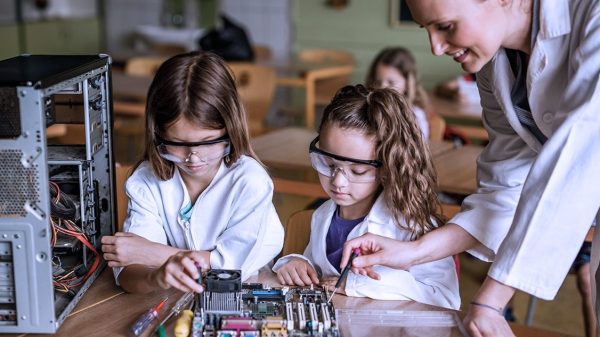
And here is something that, as a mother, I also observe: curiosity is there from a very young age. The difference often lies not in the interest itself, but in how that curiosity is nurtured—or diverted—over time.
Closing this gap involves acting on the environment, not on individual choice, and in particular, support through shadowing, networking and mentoring helps to ‘bring home’ the fact that, in reality, there are already many outstanding women at the forefront of the STEM world.
A shared challenge: education, business and society
Over the past ten years, it has also become clear that there are several ways to accelerate change:
- The education system plays a key role in how these disciplines are presented: more applied, more connected to reality, more inclusive.
- Businesses can contribute by creating visible role models, promoting diverse environments and bringing technology closer to the younger generations.
- Public institutions must continue to promote policies that foster equal opportunities.
- And society as a whole, starting with the immediate environment, has the capacity to influence—and sometimes decisively so—career choices.
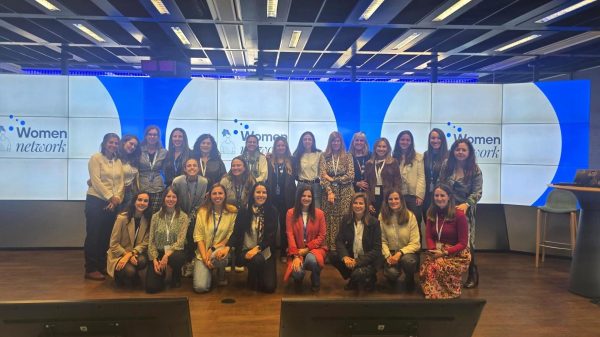
Initiatives driven by organisations such as the ASTI Foundation, Technovation Girls or Women in Tech are moving precisely in this direction, supporting girls and women at different stages of their development. Their objective is clear: to act from an early age, to provide role models and to highlight the real impact that STEM careers have on society.
From visibility to action
If the first decade of this International Day has served to shine a spotlight on the issue, the next should focus on continuing to accelerate and build on the path already begun.
Because the challenge is not merely to increase the number of women in STEM.
The real challenge is to ensure that no one rules out these disciplines before having had a genuine opportunity to explore them.
Science, after all, is not a path reserved for the few. It is a way of understanding the world, of questioning it and of improving it.
And in a context where technology is advancing at breakneck speed, we need more perspectives, more diversity and more talent.
Not for the sake of balance. But for the sake of the future.