Telefónica Educación Digital, Telefónica España’s division specialized in training and digital skills development for the corporate sector, will contribute to the digital transformation of education and training at more than 2,811 Vocational Education and Training (VET) centers across Spain.
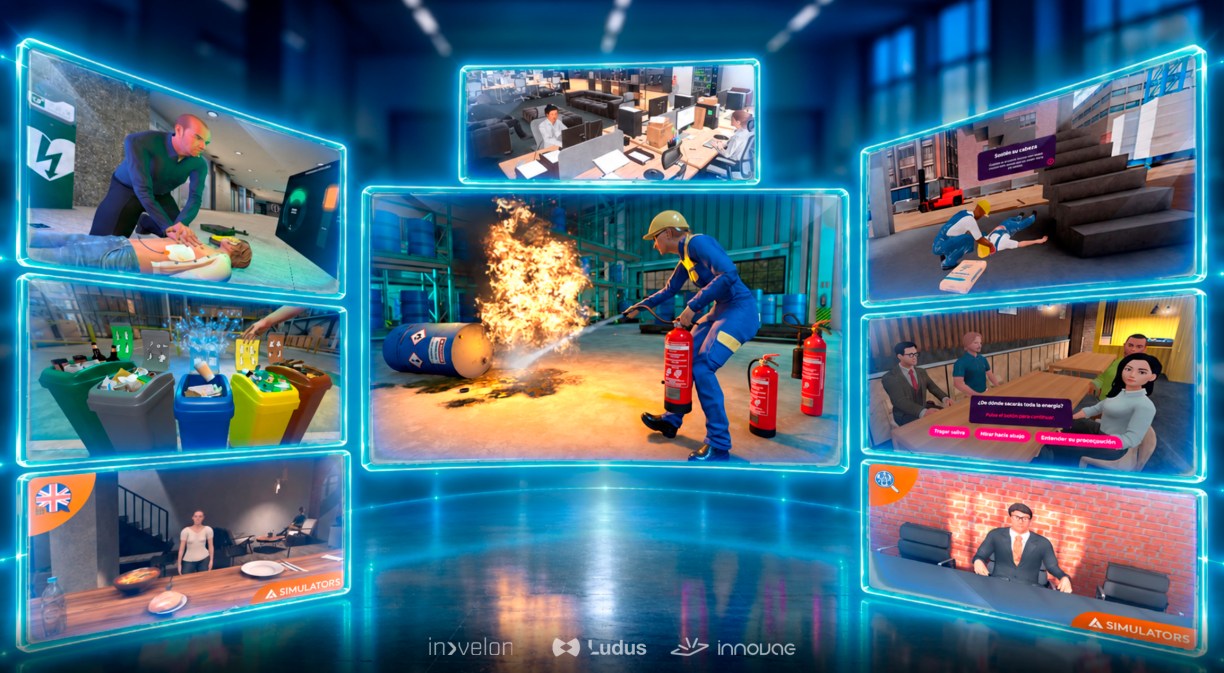
Telefónica Educación Digital will be responsible for providing training content for simulators and digital twins used in VET over the next four years, with a particular focus on the development and distribution of virtual reality content covering cross-cutting skills such as occupational safety, risk prevention, health, sustainability, employability, inclusion and language skills.
The aim is to enhance students’ preparation through new practical tools and technologies available on the market, which make it possible to simulate real-life workplace situations and provide training for up to 1.2 million students across Spain. The initiative will give students and teachers access to digital technologies that bring them closer to real-world working environments.
Rosalía O’Donnell Baeza, CEO of Telefónica Educación Digital, said: “At Telefónica, we want to become more innovative and competitive in order to address the needs of companies and public administrations and provide them with more and better services. Simulators enable students to learn protocols, make decisions and face risk scenarios in safe virtual environments. These solutions promote experiential learning by combining guided training, independent practice and objective performance assessment”.
The project includes more than 157,000 initial licenses, which can be expanded by an additional 12,000, as well as a Welcome Pack for each simulator containing software, manuals and training resources. The simulators have been developed with the participation of Ludus, a startup from the Wayra ecosystem, Telefónica’s corporate venture capital arm, as well as manufacturers Innovae and Invelon, Spanish companies specializing in virtual reality (VR) and digital twins. They are designed to run on standard equipment, including the VR devices available at the participating centres.
Key capabilities of these applications include active interaction with scenarios, action tracking, immediate feedback and the ability to store usage history. The simulators are also integrated into a centralized platform at Spain’s Ministry of Education, Vocational Training and Sports, which will manage and distribute the licenses under a concurrent licensing model, enabling simultaneous use by multiple users. The project also includes support, maintenance and updates through 2030.
With record enrolment of more than 1.2 million students in the 2025-2026 academic year, VET has established itself as one of Spain’s main pathways to education, training and employment, with advanced technologies playing an increasingly important role in this learning model. Against this backdrop, Spain’s Ministry of Education, Vocational Training and Sports has launched a national programme financed by the European Union’s NextGenerationEU funds to deploy 53 simulators and digital twins across 2,811 public VET centers. The initiative covers all 26 vocational fields and enables students to practice in safe, immersive virtual environments aligned with the real needs of the job market.
The programme, representing an investment of €37.9 million and more than 253,000 simulation licenses, aims to improve employability, bring Industry 4.0 closer to the classroom and strengthen digital skills training through technologies such as virtual reality, specialized simulators and digital twins.