Telefónica, through its business unit Telefónica Tech, has partnered with the global healthcare technology company Harrison.ai to offer an artificial intelligence-based solution in Spain that will support healthcare professionals during the diagnostic process for chest X-rays.
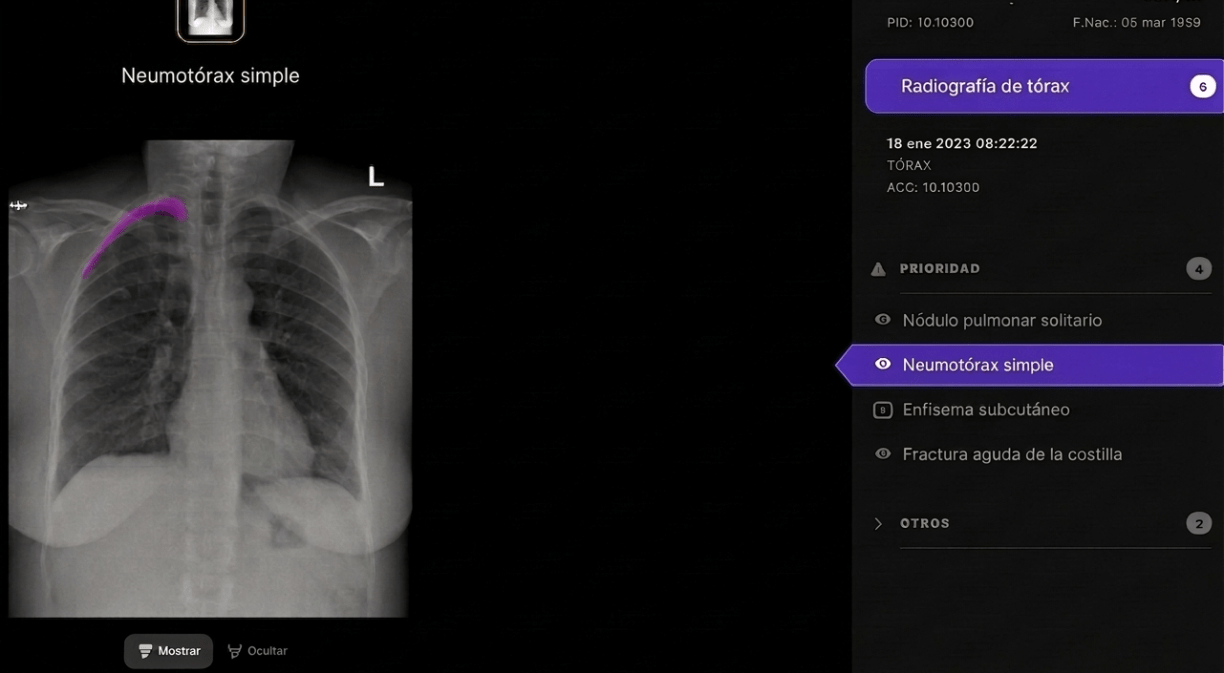
The technological solution incorporates a diagnostic support algorithm capable of analysing chest X-rays, automatically identifying up to 124 clinical findings (including pulmonary nodules to facilitate lung cancer screening) and detecting other critical conditions at an early stage.
The artificial intelligence algorithm used has been trained using data from more than 780,000 chest X-ray studies, each of which has been independently labelled by at least three qualified radiologists to ensure diagnoses of a high standard of quality and reliability. Furthermore, the algorithm is certified as a medical device under the CE IIb marking, which provides the highest level of assurance in diagnostic support as it is authorised to address conditions that may pose a risk to patients’ lives and guarantees compliance with the safety, efficacy and quality requirements set out in European Union legislation.
The solution integrates into existing healthcare systems and infrastructure, thanks to the professional services provided by Telefónica’s artificial intelligence and data experts, who ensure the technology can be adapted to the specific technical and clinical characteristics of each healthcare system. The company also provides managed maintenance and ongoing support services.
Carlos Martínez, Head of Data and AI at Telefónica Tech, explains: “The incorporation of artificial intelligence into radiology represents a significant step towards more effective and efficient healthcare models, in which technology becomes an ally of healthcare professionals to deliver faster, more accurate and personalised care. With this new solution, which we are already offering to several regional health services, we are continuing to expand the services we offer our clients and making progress towards our aim of becoming the best gateway for citizens, businesses and public administrations to access digital technologies.”
“We are proud to partner with Telefónica Tech to bring clinically validated and scalable AI to healthcare professionals across Spain,” says Dr Aengus Tran, CEO and co-founder of Harrison.ai. He adds: “Telefónica’s reach in Spain gives us the opportunity to do what we set out to do: reduce the gap in healthcare capacity. Our aim is simple: to help clinicians detect diseases such as lung cancer at an earlier stage, prioritise the most urgent cases and ensure that no findings go unnoticed.”
This diagnostic support solution helps healthcare professionals improve patient care by optimising response times, streamlining workflows and enabling the early detection of diseases such as lung cancer. Artificial intelligence acts as a support tool, but it is the healthcare professional who retains the final say on the patient’s assessment and the most appropriate course of treatment.
A&E and primary care services will be able to view the diagnoses generated by artificial intelligence via a web-based viewer, which acts as an initial medical filter and helps to reduce unnecessary referrals to specialists. Furthermore, the solution integrates with the systems and patient lists that the radiologist needs to review, enabling them to customise the categorisation by level of urgency and prioritise the most urgent cases.