
- The EU’s Strategic Agenda 2024-2029 has three pillars: a free and democratic Europe, a strong and secure Europe, and a prosperous and competitive Europe.
- This Strategic Agenda coincides with the institutional cycle covering the aforementioned years.
On the occasion of the EU’s institutional cycle between 2024 and 2029, and in order to delve deeper into the Strategic Agenda set for this five-year period, in the following article we will also take the opportunity to summarise what the main institutions of the 27-member club are and what powers they have.
What does the 2024-2029 Strategic Agenda consist of?
The EU’s Strategic Agenda 2024-2029 is a plan by this supranational organisation that sets out the priorities for this institutional cycle based on three pillars: a free and democratic Europe, a strong and secure Europe, and a prosperous and competitive Europe.
These priorities and their corresponding strategic guidelines are based on the Community’s premise that ‘our destiny is in our hands. We have the talent, courage and vision to shape our future effectively. This Strategic Agenda is our common commitment to serve our citizens unequivocally and to fulfil our founding goal of peace and prosperity.’
What is the 2024-2029 institutional cycle?
The EU’s institutional cycles last five years, during which the Union’s leaders agree on political priorities for the future in the context of the European Parliament elections (as we shall see later, the first elections by universal suffrage took place in 1979) and prior to the appointment of a new Commission.
The current Strategic Agenda was launched at the EU summit held in Granada, Spain, in October 2023.
From that date until 27 June, when the European Council adopted this Strategic Agenda, the approval of this document had to follow a process that included up to eight consultation groups with EU leaders in different European capitals, culminating in an extraordinary meeting of the European Council two months before its final adoption.
What are the main institutions of the European Union?
Discussing the 2024-2029 institutional cycle may help us to remember the main institutions of the EU and their most important powers:
- European Commission. Established in 1958 and chaired since 2019 by Ursula von der Leyen, this executive body is responsible for drafting proposals for new legislation and implementing the decisions of the European Parliament and the Council of the EU.
- European Parliament. Created in 1962 and directly elected since 1979, this body has a five-year term (hence the current cycle is 2024-2029) and has functions in three main areas: legislative, supervisory and budgetary.
- European Council. Composed of the heads of state or government of the Member States, the President of the European Commission and the President of the European Council himself, this body defines the general political direction and priorities of the Union.
- Council of the European Union. Unlike the European Council, this body brings together the 27 national ministers from each state in the relevant field to adopt laws and coordinate policies, taking decisions on legislative matters together with the Parliament.
- Court of Justice of the European Union. Established in 1952, this body ensures that EU legislation is interpreted and applied in the same way in all 27 Member States, and that they and the institutions comply with Community law.
- European Central Bank. Its main functions are to manage the euro (although not all EU countries are in the Eurozone), maintain price stability and direct the monetary and economic policy of the 27 Member States.
- European Court of Auditors. Its main function is to check that European Union funds are received and used correctly, promoting better financial management.
Telefónica’s position on the 2024-2029 Strategic Agenda
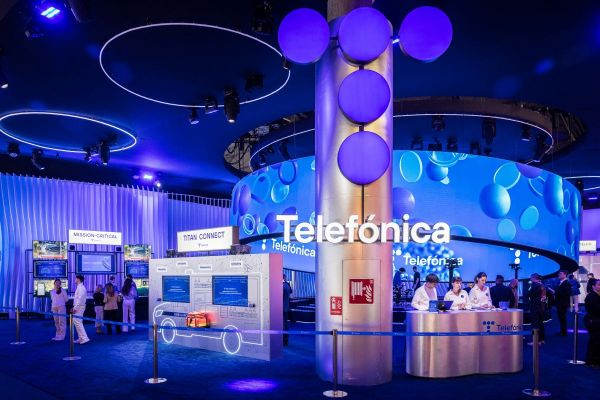
Under the slogan ‘Sustainable in design, innovative in digital’, Telefónica’s position on the European Union’s Strategic Agenda 2024-2029 supports the construction of a future in which both environmental commitment and technological excellence define not only the economic but also the social prosperity of the EU.
Looking ahead to this cycle, the operator advocates stimulating growth through digital innovation by promoting technologies such as AI, IoT and edge computing, strengthening digital infrastructure, which involves fostering entrepreneurship, prioritising cybersecurity and attracting talent to the Old Continent.
Given that a strong economic base is crucial to Europe’s prosperity, competitiveness, employment and global role, Telefónica supports the aspirations of a resilient and sustainable continent by providing it with effective and inclusive connectivity.
FAQ
It is the European Union’s strategic plan for those five years based on three pillars: a free and democratic Europe, a strong and secure Europe, and a prosperous and competitive Europe.
In 1958.
In 1979, members of the European Parliament began to be elected by universal suffrage.
No. The European Council is made up of EU heads of state or government, and the Council of the EU is made up of ministers responsible for the subject to be discussed. Their functions are also different: the former defines general guidelines and priorities, while the latter exercises legislative functions together with the Parliament.
The European Commission, the European Parliament, the European Council, the Council of the European Union, the Court of Justice of the EU, the European Central Bank and the European Court of Auditors.