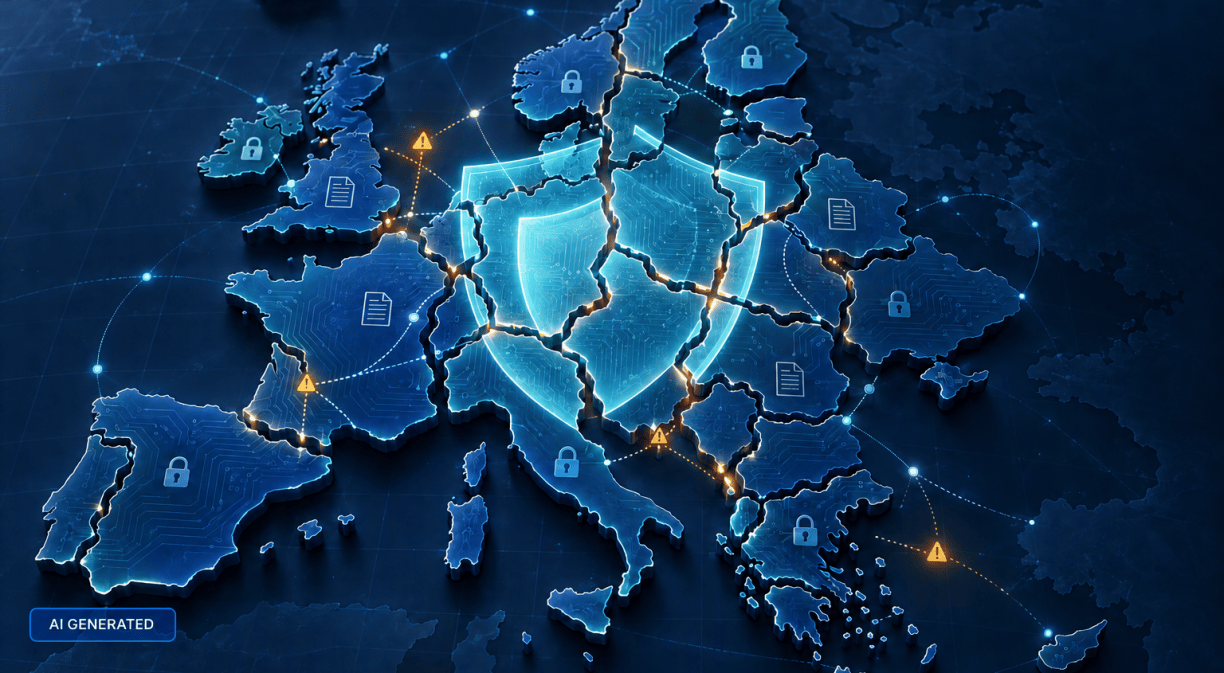

As societies become more dependent on digital services, protecting networks and ensuring their continuity becomes increasingly important. Cyber threats are also becoming more sophisticated, particularly with the use of artificial intelligence. Governments are responding by strengthening cybersecurity requirements. However, when these requirements overlap or differ across countries, they can make it harder for businesses to protect their systems effectively.
This is the issue that Business at OECD (BIAC) set out to explore at the request of its members, following a letter from chief information security officers to G7 and OECD countries in April 2025. Its initiative seeks to understand the economic costs and security risks of regulatory fragmentation and to identify opportunities for international cooperation. For telecommunications operators, which manage critical infrastructure and must ensure continuity of service in the face of both cyber and physical risks, this is particularly relevant.
The findings, published in November 2026 in the report “Resolving Cybersecurity Regulatory Fragmentation for Security and Economic Growth”, draw on a survey of 25 multinational enterprises across sectors, with over 1,200 data points, complemented by desk research and input from national business federations. Among the companies surveyed, 68% report that fragmentation diverts resources from security operations to compliance, while 72% expect that reducing fragmentation would free up resources for cybersecurity operations. More than one third estimate that managing fragmentation costs them over €1 million annually.
How regulatory fragmentation affects cybersecurity
Incident reporting provides a good example of how fragmentation affects day-to-day security operations. A single cyber incident may have to be reported to several authorities, each applying different definitions, thresholds, deadlines or reporting channels.
In practice, preparing multiple notifications can require legal, engineering and security teams to devote time to administrative tasks at precisely the moment when their expertise is most needed to investigate, contain and recover from an incident.
This challenge is aggravated by the shortage of cybersecurity professionals. Duplicating compliance tasks increases pressure on already stretched teams, makes it harder to retain talent and limits opportunities to develop specialist skills.
Similar difficulties arise when unnecessary or disproportionate data localisation requirements, specific monitoring tools or national reporting portals prevent security teams from combining information across borders. Without a sufficiently comprehensive view of what is happening across their systems, teams may find it harder to identify emerging threats at an early stage.
The ability to coordinate security operations across countries is therefore important, alongside the local capabilities needed to meet legitimate security requirements. Attackers only need to exploit one vulnerability, whereas defenders must protect their systems as a whole. Artificial intelligence makes this challenge more complex by increasing the speed and scale of attacks, but it also offers new ways to improve prevention, detection and response.
Operating at scale can help companies deploy advanced security capabilities more efficiently. Smaller businesses often have fewer resources to deal with divergent requirements, but even large companies can face difficulties coordinating their response to threats across borders.
The economic consequences are also significant. Repeated audits, certifications and reporting obligations, as well as duplicative local infrastructure requirements, can absorb resources that could otherwise support cybersecurity investment, network redundancy, preparedness and innovation.
How can regulation contribute to better security outcomes?
One practical starting point would be to simplify incident reporting. Common definitions, thresholds and deadlines, together with closer cooperation among authorities and interoperable reporting systems, could allow companies to submit information once and make it available to the relevant authorities. This approach would help teams devote more time to responding to incidents without compromising regulatory oversight.
More generally, cybersecurity requirements should be proportionate to the risks they address, technically feasible and focused on measurable security outcomes. Greater mutual recognition of cybersecurity labels and certifications based on international standards could also reduce the need to repeat equivalent assessments in different jurisdictions. Certification should generally remain voluntary, while allowing justified and proportionate mandatory requirements, particularly for critical infrastructure.
The importance of international cooperation
Regulatory coherence alone will not resolve every cybersecurity challenge. Governments and businesses also need to work together to develop specialist skills. Targeted tax and financial incentives could help smaller companies invest in secure technologies and meet regulatory requirements.
Involving businesses early in the development of regulation can help policymakers understand the practical implications of new requirements. Business at OECD therefore calls on the OECD Working Party on Digital Security to gather evidence, bring regulators and other stakeholders together and develop practical guidance on regulatory coherence and interoperability, with incident reporting as an immediate priority.
International cooperation is particularly important because cyber threats and digital supply chains extend across countries and sectors. Businesses need to be able to coordinate security operations and share threat intelligence while maintaining necessary local capabilities and respecting legitimate security and data protection requirements. Protecting supply chains also requires cooperation and responsibility across the entire digital ecosystem, rather than relying on any single vendor.
For Telefónica, cybersecurity is an essential part of operating critical infrastructure, ensuring continuity of service and maintaining the trust of citizens, businesses and public institutions. Greater regulatory coherence can help telecommunications operators deploy advanced security capabilities at scale and respond more effectively to emerging threats.
The objective is not to lower cybersecurity standards, but to ensure that regulation contributes effectively to the protection of society. By reducing unnecessary fragmentation, governments and businesses can make better use of scarce expertise and investment, strengthen networks, improve preparedness and ensure the continuity of critical connectivity when disruptions occur.