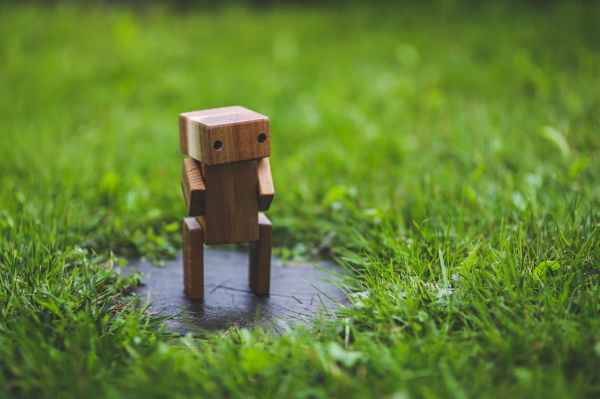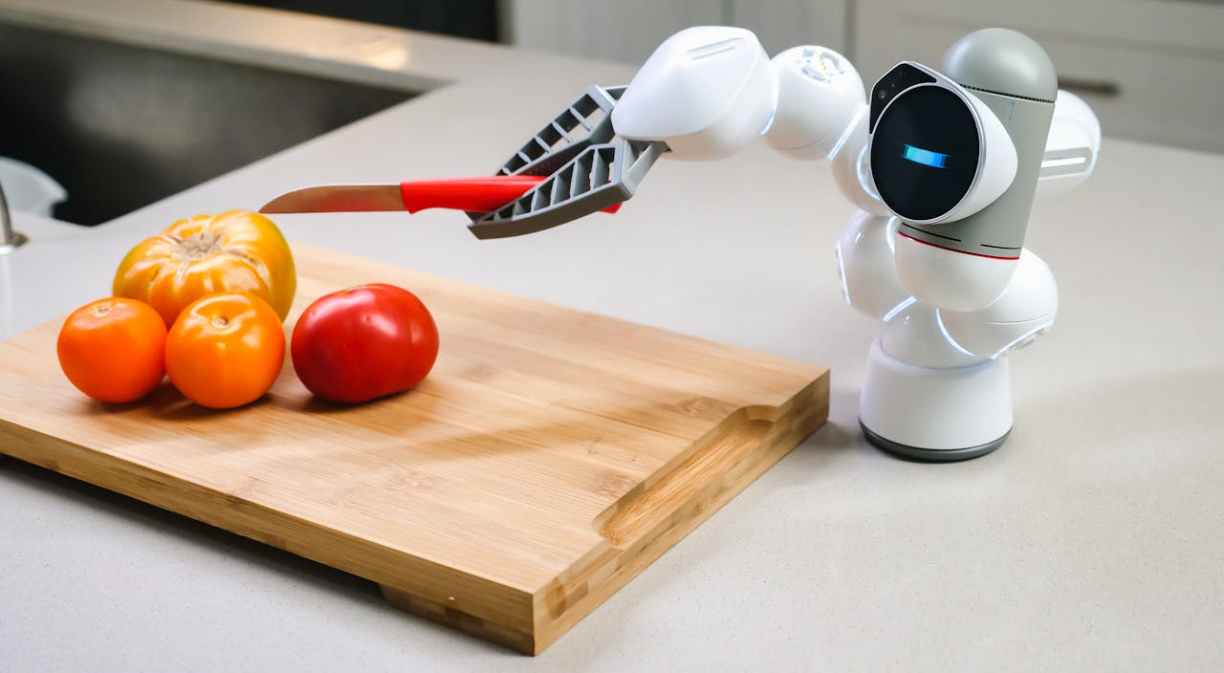

- Robotics is responsible for designing machines capable of automating tasks.
- AI and robotics have common features, but they are not the same. How are they similar, and what are their differences?
- What do Isaac Asimov’s laws of robotics advocate?
What is robotics?
Robotics is the discipline responsible for designing machines that have the ability to automate tasks, with experts in this field creating, programming and operating these automated elements to perform tasks and skills.
It is also multidisciplinary, integrating mechanical engineering, electronics, computer science and AI to create machines capable of performing tasks automatically or semi-automatically, as mentioned above.
Its function may be to replace human tasks, although it may also be limited to assisting humans in certain tasks.
Differences between artificial intelligence and robotics
It should be noted that, although they have common features, robotics and AI have differences. The main difference lies in their focus, as robotics focuses on the manipulation of the physical area, while AI focuses on the internal or digital part.
The area of application is also different, since robotics creates machines that have their own mobility and can interact with the environment, while AI focuses on data processing and algorithm design.
Characteristics of robotics
One of the main characteristics of robotics is its interdisciplinary nature, as mentioned above: the combination of multiple branches of both science and engineering that enable the creation of complex systems.
The design and construction of robots also falls within the remit of robotics, to which must be added software programming to specify what tasks they should perform and how to do so, which can range from the simplest actions to complex processes.
Efficiency and precision are other characteristic features that robotics must have, since robots have to operate continuously and with a high level of precision, which leads to increased productivity and minimised errors.
The fact that the environments in which robots must operate are often demanding means that robotics must be both durable and reliable.
The evolution of robotics in recent years has also been accompanied by a new feature, which is adaptability to changing environments in order to operate.
Safety must also be another feature of robotics, both to protect people operating in the vicinity of robots and to protect the devices and/or facilities themselves.
Isaac Asimov’s Laws of Robotics
Although from a more literary perspective and not so much from the point of view of practical applications in everyday robotics, one cannot discuss this subject without mentioning Isaac Asimov’s laws of robotics, in the field of science fiction.
This multifaceted American author of Soviet origin set out his three famous laws in one of his stories (Vicious Circle, 1942), the moral and ethical basis on which autonomous systems should be developed:
- A robot may not injure a human being or, through inaction, allow a human being to come to harm.
- A robot must obey the orders given to it by human beings, except where such orders would conflict with the First Law.
- A robot must protect its own existence as long as such protection does not conflict with the First or Second Law.
Isaac Asimov, who is one of the most influential figures in robotics, added the Zero Law in 1985 (in his work Robots and Empire), a kind of fourth law of robotics:
- A robot may not harm humanity, or, through inaction, allow humanity to come to harm.