
How Telefónica is combining drones, artificial intelligence and 5G to digitise infrastructure management
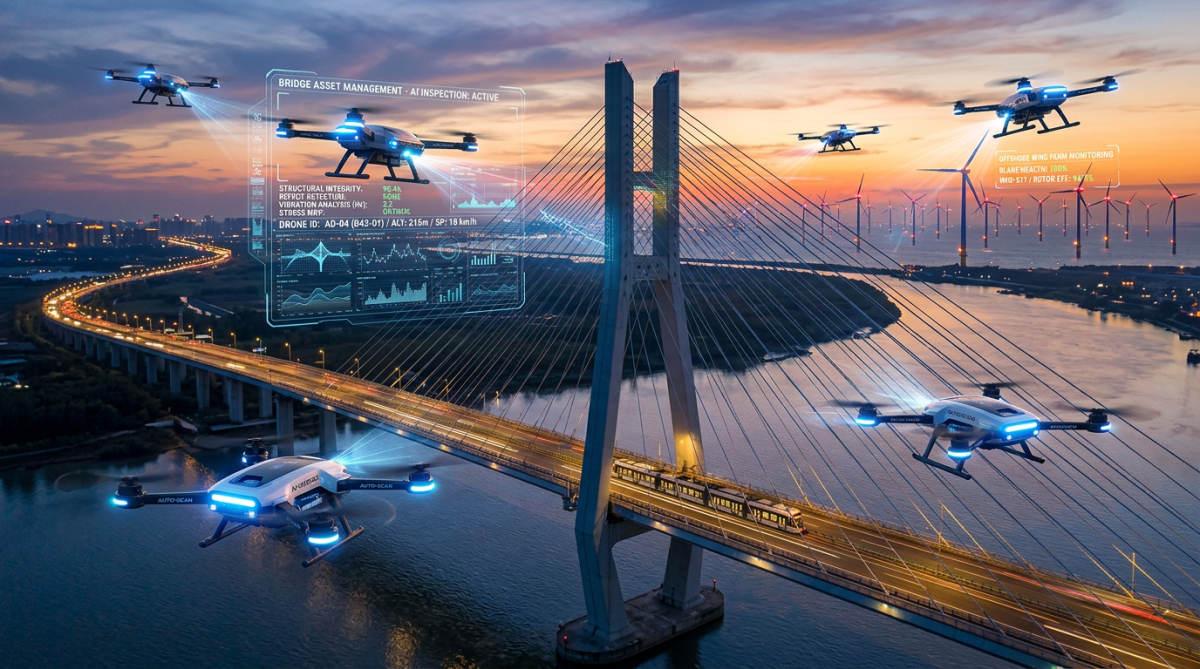
Telefónica is exploring and validating the combined use of drones, 5G connectivity and artificial intelligence to transform the inspection and management of its infrastructure. Among the initiatives undertaken are the inspection of telecoms sites and masts using drones, as well as the creation of three-dimensional models and digital twins of these facilities.
Drones enable the rapid and systematic capture of RGB images, thermal data and photogrammetric data from towers, masts and other network elements. Using this data, computer vision algorithms can help identify anomalies such as corrosion, damage, displaced components, deteriorated connections, hotspots or changes compared to previous inspections.
The digital twin also provides an up-to-date representation of each site, against which measurements can be taken, inventories checked, equipment upgrades or replacements planned, and interventions prepared without the need to visit the site in person beforehand. In this way, the drone ceases to be merely an image-capture tool and becomes an integral part of digital asset management processes for data acquisition.
The benefits of AI-powered drones for optimising network maintenance and operations
The first benefit is the reduction in the time and effort required to inspect extensive, dispersed or hard-to-access infrastructure. A drone can inspect a tower or site whilst maintaining a consistent flight path and consistent capture criteria, which facilitates comparison between inspection campaigns and improves the quality of the data obtained.
It also helps to reduce technicians’ exposure to working at height and allows on-site interventions to be reserved for cases where a fault has actually been identified. This does not eliminate the need for specialists, but rather provides them with more comprehensive information before they travel to the site and enables them to better prepare the necessary work, tools and spare parts.
Artificial intelligence adds analytical and prioritisation capabilities. Instead of manually reviewing thousands of images, the systems can flag potential defects, classify their severity and compare an asset’s condition over time. This facilitates the transition from primarily periodic or reactive maintenance towards condition-based and, progressively, predictive maintenance models.
Other benefits include reduced travel, improved asset inventory, greater traceability of inspections, faster response times following weather events or incidents, and the ability to manage inspection campaigns in a centralised and scalable manner.
Smart security and critical infrastructure: the value of real-time aerial monitoring
Drones can complement fixed security systems through scheduled patrols or on-demand flights over critical sites. Their RGB and thermal cameras provide an aerial view of the facility, detect changes in the environment and enable rapid verification of an alarm without the initial need to dispatch a team on site.
Artificial intelligence can analyse the video to help identify people or vehicles in restricted areas, unauthorised access, smoke, heat sources, abandoned objects, damage to perimeter fencing or deviations from the facility’s normal state. The aim is to provide the security operator with a tool that allows them to filter information and generate contextualised alerts, facilitating a faster and more proportionate response.
5G connectivity enables real-time transmission of video and telemetry to a control centre, whilst edge computing allows part of the information to be processed close to where it is generated. This combination reduces the time between the detection of an anomaly and decision-making, which is particularly important in critical infrastructure.
AI-powered drones: an example of the technological innovation driven by Telefónica
Drones represent a particularly comprehensive example of technological convergence, as they combine 5G connectivity, artificial intelligence, edge computing, the cloud, the IoT, computer vision, robotics, cybersecurity and digital operations platforms. As such, they serve as a highly significant demonstration of how Telefónica’s network capabilities can be transformed into new, high-value digital services.
Telefónica does not merely provide connectivity for the drone. Through its Drone as a Service model, it can integrate the aircraft, the automated docking station, sensors, communications, remote piloting, permits, data processing and the delivery of results to the customer. This comprehensive approach enables the transfer of internally developed capabilities to sectors such as telecommunications, energy, industry, security, emergency services and the environment.
Artificial intelligence is what enables the images and data collected during the flight to be transformed into actionable information. The real value lies not merely in flying over infrastructure, but in helping to detect anomalies, update the digital twin, generate an alert, open a maintenance order or provide the asset manager with an evidence-based recommendation.
This combination reinforces Telefónica’s position as a company capable of integrating network, operations and advanced analytics, and of turning emerging technologies into real, secure and scalable services.
Major regulatory, privacy and cybersecurity challenges in the use of smart drones
From an aeronautical perspective, many of these operations fall outside the scope of the open category and require operation under the specific category. More advanced flights, particularly those conducted beyond the pilot’s visual line of sight (BVLOS), demand a detailed risk assessment, operational authorisations, coordination with air traffic control and mitigation measures tailored to the environment.
Another challenge is to advance automation without confusing it with full autonomy. Currently, routes, take-offs, landings, recharging, data capture and certain analyses can be automated, but the operation must remain under human supervision and have procedures in place to respond to loss of communications, navigation degradation, changes in weather conditions or the presence of other aircraft.
With regard to privacy, cameras may capture people, vehicles, number plates, homes or activities unrelated to the purpose of the inspection. It is necessary to apply the principles of data minimisation and purpose limitation, define capture zones and angles, restrict retention periods, control access and, where necessary, anonymise or blur images. Certain operations may also require a data protection impact assessment.
Cybersecurity is equally critical. The command and control link, telemetry, video, management platforms, automated stations and artificial intelligence models must be protected. This involves using encrypted communications, robust device and user identities, access control, network segmentation, secure software updates, continuous monitoring and contingency plans.
Finally, AI itself poses governance challenges: the quality and representativeness of training data, false positives, traceability of decisions, human oversight, model degradation over time and compliance with the European AI framework.
Telefónica’s strategy for automating operations and anticipating the future of the market
Telefónica is integrating these capabilities through an end-to-end architecture that connects drones and automated stations to the 5G network, remote control platforms, edge and cloud computing, artificial intelligence models, and customer and operations information systems.
The Drone Control Centre, located at the National Supervision and Operations Centre in Aravaca, enables the centralised monitoring of aircraft deployed across different locations. This model facilitates the transition from isolated projects to a multi-site operation, in which specialist pilots can manage recurring or on-demand missions without having to be physically present alongside the drone.
Integration with artificial intelligence enables the automation of an increasing proportion of the operational cycle: mission planning, standardised data capture, anomaly detection, incident classification, report generation, updating of digital twins, and integration with asset management and maintenance tools. A model of human supervision is maintained at all times, commensurate with the criticality of the operation.
This strategy enables Telefónica to anticipate a growing demand for automated, recurring and data-driven services. The aim is not to carry out isolated flights, but to offer a scalable operational platform capable of inspecting, monitoring and protecting infrastructure, transforming the data captured by the drone into business decisions and operational actions.
Conclusion: from data capture to smart decision-making
True innovation lies not solely in the use of drones, but in the ability to integrate connectivity, artificial intelligence, automation and advanced analytics to turn data into decisions. This is the step that enables the evolution from traditional inspection towards predictive management models, safer operations and new digital capabilities for businesses and public authorities.
In line with Telefónica’s strategic vision of “becoming the best gateway for citizens to digital technologies”, initiatives such as connected drones and artificial intelligence demonstrate how network capabilities can be transformed into high-value digital services for customers and strategic sectors. At the same time, they contribute to a broader ambition: “to contribute to Europe’s technological sovereignty” through innovative, secure and scalable solutions capable of accelerating the digital transformation of the economy.