The European Commission and a consortium led by Telefónica and comprising more than 70 European entities have unveiled EURO-3C, the first pan-European sovereign infrastructure integrating Telco, Edge, Cloud and AI capabilities under a federated, open and secure model, designed to accelerate Europe’s digital and industrial transformation. This € 75Mn project is funded by the European Commission’s Horizon Europe programme.
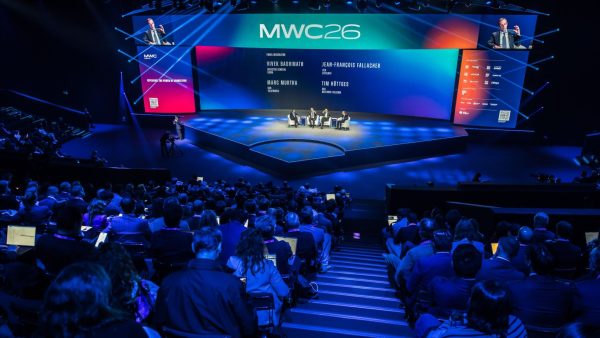
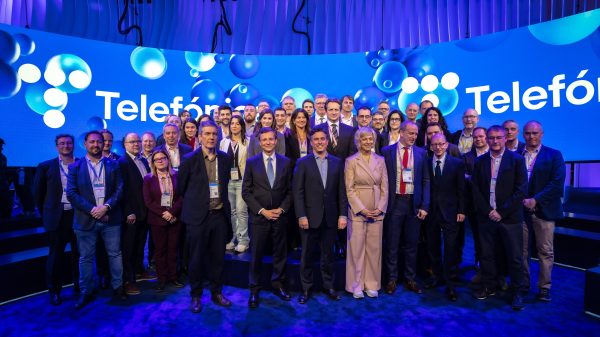
The announcement took place today at the Telefónica stand at MWC26 and was attended by Renate Nikolay, Deputy Director General at the European Commission, and Juan Montero, Director of Public Policy, Competition & Regulatory Officer at Telefonica , marking an important milestone in the consolidation of a strategic European digital infrastructure.
EURO-3C is aligned with the priorities of the European Union’s Digital Decade Policy Programme 2030, which places secure and sustainable digital infrastructures as one of its strategic pillars.
Infrastructure in production for strategic sectors
EURO-3C deploys a federated multi-telco and multi-vendor infrastructure in production environments, with more than 70 Edge and Cloud nodes distributed in more than 13 European countries.
This network makes it possible to offer advanced digital services with high standards of performance, interoperability and security, responding to critical needs in the automotive, transport, energy and public safety sectors, among others.
Federation, scale and impact
The project is supported by three differential elements:
-Federation: an interoperable architecture that connects existing capabilities of multiple operators and cloud providers in a common European framework.
-Pan-European industrial scale: collaboration between operators, industry, technology suppliers, SMEs and research centres.
-Validated impact: nine high business value use cases that will demonstrate real applicability and scalability.
EURO-3C also integrates advanced AI-enabled orchestration capabilities and interoperable services, ensuring a resilient, efficient infrastructure that is ready to take on the challenges of the next decade.
Renate Nikolay, Deputy Director General at the European Commission, said: “The European Commission strongly promotes secure digital communication infrastructures made in Europe, aiming to make the most of telco-edge-cloud convergence, with and for AI. The EU-funded project EURO-3C announced today federates the efforts of a very large number of European players around a common goal: to build a secure and sovereign convergent communications landscape, for the benefit of industrial sectors supplying and using technology, and for society at large.”
Juan Montero, Director of Public Policy, Competition and Regulation at Telefónica said: “The European Union has made technological sovereignty and industrial competitiveness a priority. Achieving this requires not only advanced digital infrastructures, but also strong collaboration across sectors and countries. And the telecommunications sector is a key player in this effort. This is precisely what EURO 3C aims to deliver: a European scale cooperative computing network that brings together telco capabilities, connectivity, Edge and Cloud, all enhanced with AI. It is a shared effort to reinforce Europe’s industrial leadership and lay the foundations for true digital sovereignty.”
A collective European effort
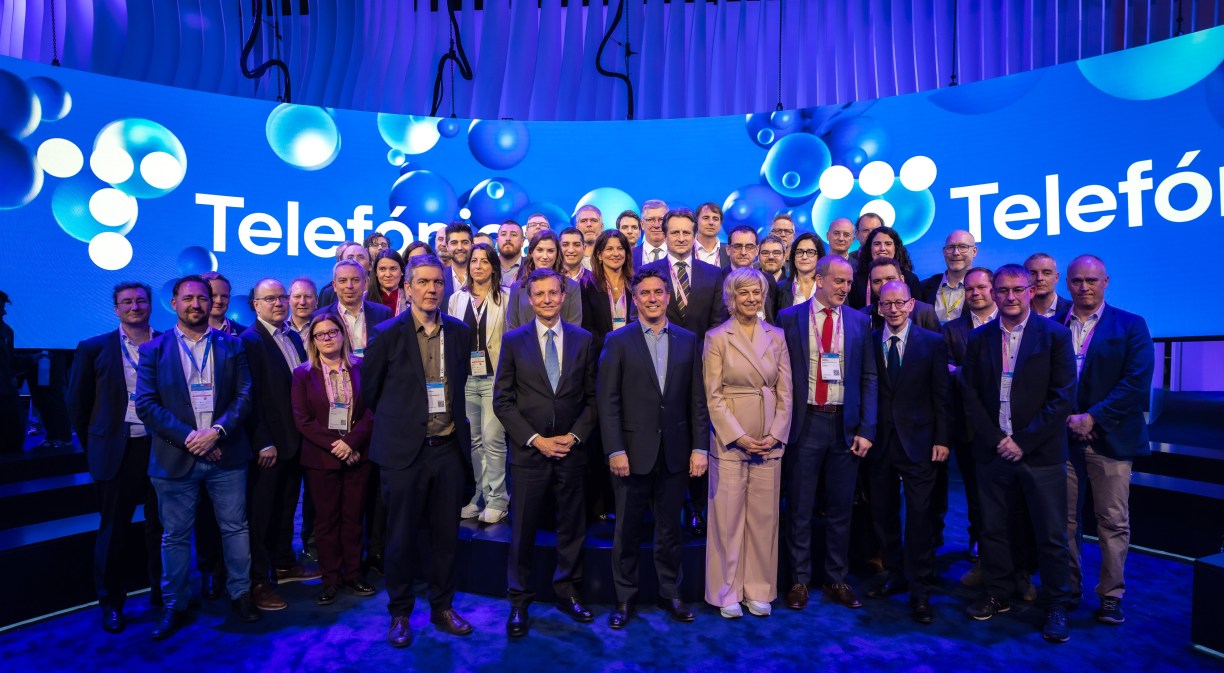
EURO-3C brings together more than 70 entities, including telecoms operators, cloud providers, technology manufacturers, SMEs, universities, research centres and large industrial companies, consolidating a cooperation model that strengthens European technological capacity in key parts of the digital value chain.
The event also featured Sebas Muriel, Chief Digital Officer of Telefónica, who outlined the strategic vision and mission of the initiative. Representatives from other consortium members — including Vodafone, Ericsson and the Spanish SME Nearby Computing — also took the floor to share their perspectives.
The following entities are beneficiaries of the project: Telefónica – Eurescom – British Telecom – Capgemini – Citymesh – Deutsche Telekom – Elisa – Engineering – Ericsson – Ionos – IDC – KPN – MEO – Nokia – Orange – OVH – Suse – Swisscom – Fastweb – Telenor – TIM – Thales – Vodafone – Fogus – Krateo -Martel – Nearby – Nextworks – OpenNebula – Real Wireless – Scille – Sedicii – Ubitech – Wings – CTTC – F. Bruno Kessler – Fraunhofer – IMEC – INRIA – ITAV – POLITO – PCSS – TNO – UC3M – UOULU – ECSO – ETSI – PSCE – AIT – Bavarian Red Cross – ITTI – Frequentis – Meditech – Stellantis – Teltronic – Electricite de France – Harman – CAF – Multiverse Computing – OGRE.
The following entities (national authorities) are affiliated with PSCE: Erillisverkot (Finland) – Ministry of Citizen protection (Greece) – National Agency for Communication and Information Technologies (Czechia) – Ministerio del Interior (Spain) – The Agency for Operational Mobile Communications for Security and Emergency Response (France) – Department of Public Expenditure, NDP Delivery and Reform (Ireland) – Netherlands Police (The Netherlands) – The Norwegian Directorate for Civil Protection (Norway) – National Police Directorate (Norway) . Ministry of the Interior and Administration (Poland) – Special Telecommunications Service (Romania) – Swedish Civil Defence and Resilience Agency (Sweden) – Swedish Police Authority (Sweden).