
What are drones?
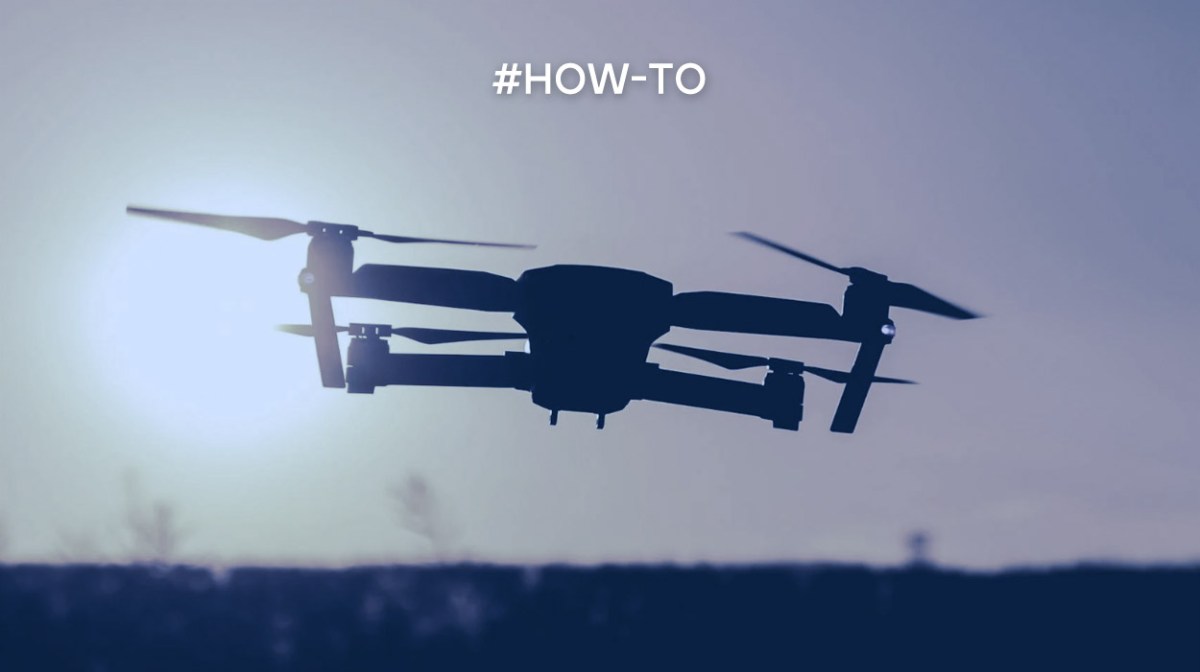
Well, to start with the basics: a drone, or to be more technical, an unmanned aerial vehicle, is basically an aircraft that flies without anyone inside piloting it. When I say this, many people think of the typical devices with four propellers that you see flying in the park, but in reality, the concept is much broader.
A drone can be controlled in two ways: either there is an operator on the ground (near the drone or remotely) with a remote control, watching it fly and telling it where to go, or the drone is programmed to fly autonomously, using GPS and artificial intelligence to make its own decisions.
What I think is important to note is that we are no longer talking about toys. Today’s professional drones carry high-resolution cameras, thermal sensors, LiDAR that generates 3D maps… they are highly sophisticated technological tools that are revolutionising entire sectors of the economy.
What types are there?
There are several ways to classify them, but the simplest is by the number of propellers they have. The most popular are quadcopters, the ones we all know with four rotors. They offer the perfect balance between cost, stability and ease of use. Then there are hexacopters, with six propellers, which are more stable and can carry more weight, ideal for professional photography and filmmaking. And if you need even more power, there are octocopters with eight rotors, which are used in complex industrial tasks where you cannot afford to make mistakes.
But there are also fixed-wing drones, which are more like small aeroplanes. These cannot hover in the air like multirotors, but in return they have much more autonomy and can cover enormous distances. They are perfect for forest surveillance, inspecting power lines in remote areas or mapping large areas of land.
And then there is the classification by weight and use, which is important because it determines what you can do with each one. From the smallest ones weighing less than 250 grams to industrial drones that can carry loads of more than 25 kilos. Each category has its own regulations, which are now essential if you want to operate legally.
What are their main applications today?
This is where things get really exciting, because drones are transforming industries in ways that seemed like science fiction just a few years ago.
In agriculture, for example, they are bringing about a total change. A drone equipped with multispectral cameras can fly over a field and detect whether parts of the crop are diseased, stressed by lack of water or being attacked by pests, and it does so before the problem is visible to the human eye. This allows farmers to apply treatments only where they are needed, reducing the use of pesticides and fertilisers. We are talking about economic savings, but also sustainability.
In logistics, companies such as Amazon and DHL are experimenting with drone deliveries. And it’s not just for small packages. There are drones that already transport medical supplies between hospitals, medicines to rural areas that are difficult to access…
Then there is industrial inspection, which is one of the most established uses. Previously, to inspect a high-voltage tower, a bridge or a wind turbine, you had to send people to dangerous places, with harnesses, ropes… now a drone with a thermal imaging camera can do it in minutes, more safely and much more accurately. It detects problems that would be invisible to the naked eye.
And at Telefónica we are working on some very interesting cases. For example, warehouse inventory automation, early fire detection, and perimeter inspection of infrastructure. All this combined with 5G connectivity and artificial intelligence.
Where are they headed in the future?
The future of drones lies in three major directions, all of which are interconnected, and regulation plays an absolutely central role in all of this.
First, total autonomy. We are no longer talking about a pilot manually controlling a drone, but rather swarms of drones that collaborate with each other and make decisions in real time without constant human intervention. Imagine ten drones working together to reforest a burned area: they divide up the terrain, avoid obstacles, communicate with each other… all autonomously.
This is no longer the future; there are already pilot projects up and running. But this is where regulation comes in. European and Spanish regulations, which have been updated this year, are evolving precisely to allow these complex operations to be carried out safely. In Spain, AESA — the State Aviation Safety Agency — is defining clear frameworks so that operators can fly without constant human supervision under certain conditions.
Secondly — and this is where Telefónica has an absolutely key role to play — 5G connectivity combined with BVLOS flights. Let me explain what this is because it is essential to understanding the future.
In a VLOS (Visual Line of Sight) model for flying a drone, you have to be able to see it at all times; you cannot fly it further than your eyes can see, normally about 500 metres to 1 kilometre at most. And this, honestly, limits the applications. You cannot inspect a 50-kilometre power line. You cannot monitor a forest covering thousands of hectares. You cannot make long-distance deliveries.
But there is the possibility of flying BVLOS, ‘Beyond Visual Line of Sight’, i.e. beyond visual range. And this is where 5G completely transforms the game. With 5G, an operator in a control centre can be hundreds of kilometres away from the drone, viewing it via real-time high-definition video transmission, controlling it remotely without losing connectivity for a second. Latency is ultra-low, virtually instantaneous, allowing you to react to any unforeseen event.
Why is this so important? Because it opens up a world of new applications. An operator in Madrid could control a drone in Galicia performing an industrial inspection. Or coordinate multiple drones simultaneously covering large areas. Efficiency skyrockets.
Now, regulations are evolving to make this safe and controlled. This sometimes allows flying in BVLOS mode up to 2 kilometres in sparsely populated areas, without having to do a risk assessment from scratch every time. It is the smart way that regulation has found to open up new possibilities without sacrificing safety.
The goal is to balance innovation with safety. And in that balance, having robust 5G connectivity is key. That is why we at Telefónica are working so hard on this. We are not just selling connectivity, we are enabling use cases that were technically impossible five years ago.
And thirdly, full integration with artificial intelligence and Big Data. The drones of the future will not only capture images, they will analyse them in real time, detect problems, make decisions and send alerts. A drone that patrols a forest and detects a fire before it spreads. A drone that inspects crops and not only sees that there is a problem, but identifies what the pest is and recommends the exact treatment.
All this requires the drone to be able to transmit data in real time, for that data to be analysed using artificial intelligence algorithms, and for decisions to be sent back to the drone in a matter of milliseconds. And again, 5G is what makes this possible.
My perspective is that real change will not come from having better drones in isolation, but from creating connected ecosystems where drones, IoT sensors, 5G, artificial intelligence and Big Data work together in real time. That is what makes the difference. The regulations being developed in Spain and Europe recognise exactly this: that the future of drones is not a device that flies alone, but a connected node within a larger intelligent network.
And honestly, whoever has that orchestration capability — who has the connectivity, artificial intelligence, Big Data and knows how to integrate them into an ecosystem of operational drones — will lead this sector in the coming years.
What kind of professional profiles work with drone-related issues?
This is a question I love because many people think you only need to be a pilot, and the reality is that the sector needs very diverse profiles.
Obviously, there are drone pilots or operators, who are the ones who physically control the devices. To be a professional pilot in Spain, you need to be certified by AESA, the State Aviation Safety Agency. It’s not enough to know how to fly; you have to know aeronautical regulations, safety procedures, emergency management… There are currently more than 71,000 registered operators in Spain, which gives you an idea of how well-established the sector is.
But then you need engineers to design the systems, integrate sensors, and perform predictive maintenance. Specialists in artificial intelligence who develop algorithms so that drones can navigate autonomously, detect objects, and make decisions.
And something that many people don’t think about: data analysts. A drone that inspects 100 hectares of crops generates thousands of images, gigabytes of information. Someone has to process that, analyse it, and turn it into actionable insights. That’s where Big Data and machine learning come in…
You also need 5G and IoT specialists to ensure that the drones are always connected and that data transmission is secure and reliable.
And then you have more specific profiles: aerial photographers, instructors who train new pilots, specialists in regulation and operational safety, project managers who coordinate entire fleets of drones…
My recommendation is always the same: the future is not just about being a ‘drone pilot’, it’s about being a multidisciplinary specialist. A pilot who understands agriculture is very valuable. An engineer who combines hardware and artificial intelligence. That mix of skills is what is really in demand.
To what extent can the advancement and development of new technologies affect drones?
The impact is tremendous, in both senses: positive, but also with challenges that need to be managed well.
On the positive side, we are talking about tremendous efficiency. Tasks that used to take hours are now done in minutes. Industrial inspections that used to put workers at risk are now done safely by a drone. Last-mile deliveries that used to require a polluting van are now done by an electric drone. All of this has an economic impact, but also an environmental one.
In agriculture, the reduction in the use of agrochemicals is enormous, because you only apply them where they are needed. In logistics, you reduce CO₂ emissions. There are reforestation projects where swarms of drones plant thousands of seeds in deforested areas in a matter of hours. Things that would be impossible to do manually.
But of course, there are also significant challenges. First, regulation. Airspace is a limited resource and must be shared between drones, civil aviation, helicopters… Clear regulatory frameworks are needed, and Spain is making great strides in this area, but there is still a long way to go.
Then there is the issue of privacy and security. A drone with a camera can record where it shouldn’t. If the systems are not well protected, they can be hacked. We need very solid ethical and cybersecurity frameworks.
And then there is the digital divide. The most advanced technology is still expensive, not all sectors or countries have equal access to 5G… We run the risk of deepening inequalities if we do not manage the transition well.
But going back to what I was saying before: we believe that the real impact will come from technological convergence. It’s not just about having better drones, it’s about combining drones with 5G, with artificial intelligence, with Big Data, with edge computing… and creating comprehensive solutions that solve real business and societal problems.