
- Industry 4.0 corresponds to the Fourth Industrial Revolution, an era marked by digital innovations.
- The three previous digital revolutions brought about major socio-economic and labour changes, with the steam engine in the first, car production in the second and the Internet in the third being the most notable examples.
Before analysing the origins and history of Industry 4.0, let us briefly recall what this concept refers to.
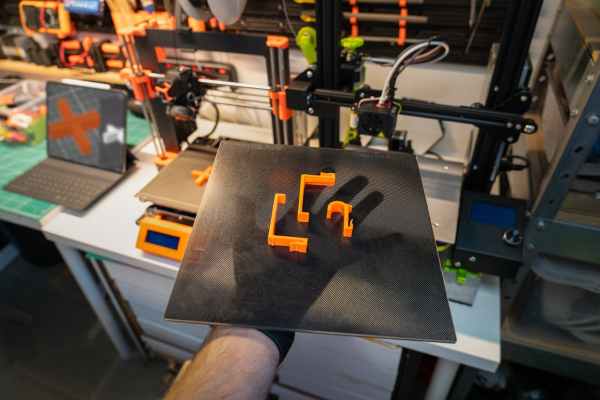
It is a technological revolution that is substantially changing the way companies in the industrial sector operate, produce and deliver goods and services based on the integration of advanced technologies such as AI, robotics, the Internet of Things (IoT) and automation.
The benefits of Industry 4.0 include improved efficiency, flexibility, productivity and customisation.
The term Industry 4.0 was coined in 2011, but how did it come about?
First Industrial Revolution
The Industrial Revolution—later, with the arrival of others, the First Industrial Revolution—refers to the process of transformation that took place in the United Kingdom between the second half of the 18th century and the first half of the 19th century.
It was an economic, social and technological transformation that saw a shift from a purely rural and artisanal economy to a mechanised and industrialised one.
Although it originated in the United Kingdom, as mentioned above, it spread throughout Western Europe and the United States and led to an unprecedented increase in the manufacture of goods, driven by the cost reductions brought about by mass production.
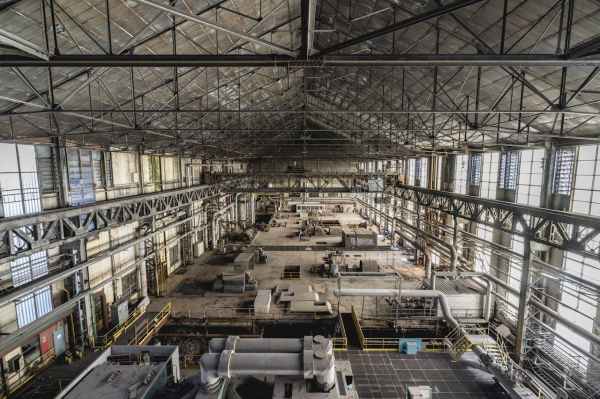
James Watt’s steam engine is considered an icon of this industrial revolution, with an impact on both the mechanisation of industrial environments such as factories and mines and improvements in maritime and rail transport, with the consequent increase in mass production and greater opportunities for global trade.
Second Industrial Revolution
The rise of new energy sources such as oil and electricity (to the detriment of coal), together with the use of innovative materials such as steel and aluminium and improvements in production methods such as the assembly line, are some of the main features of the Second Industrial Revolution.
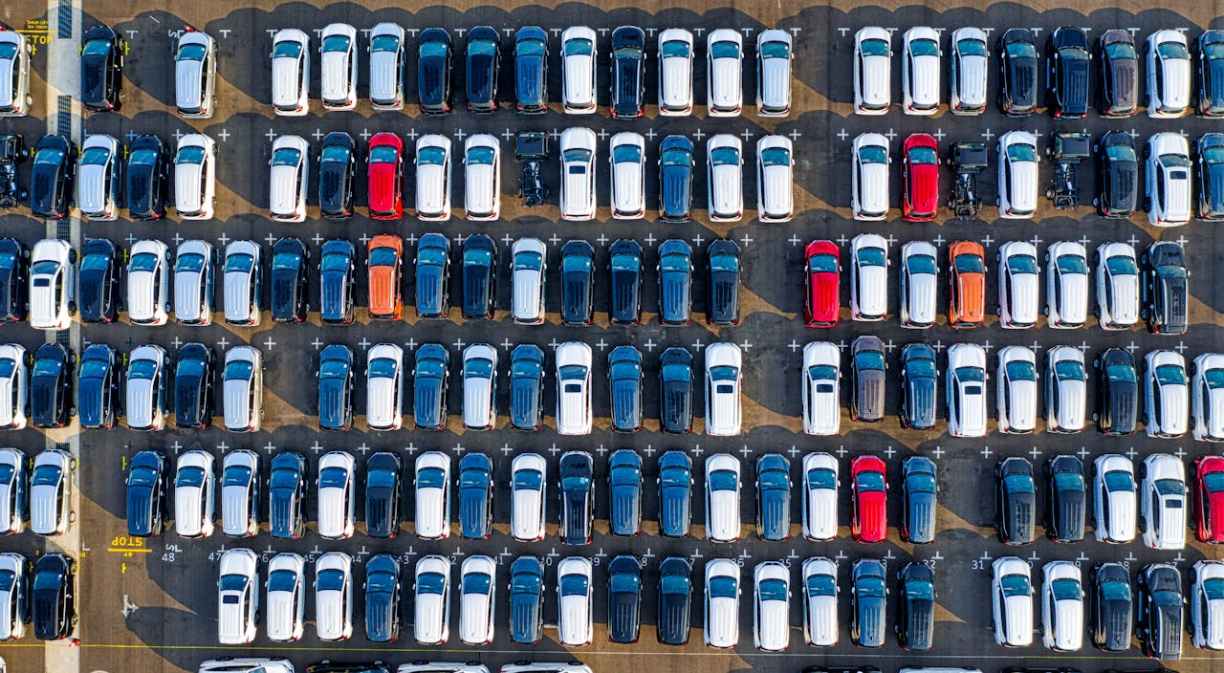
This period spanned from the late 19th century to the First World War (1914-1918) and is best known for the automobile, an example of disruptive innovation that became popular with the mass production of a device that was no longer reserved for a tiny minority of the population.
This historical period brought great progress to global industry, with a particular impact in Germany and the United States. It was also accompanied by greater market expansion with innovations in transport and greater global connectivity with inventions such as the telephone, invented by Antonio Meucci but patented by Alexander Graham Bell, and the radio.
Third Industrial Revolution
The 1970s and 1980s saw the arrival of the Third Industrial Revolution, also known as the Digital or Scientific-Technical Revolution.
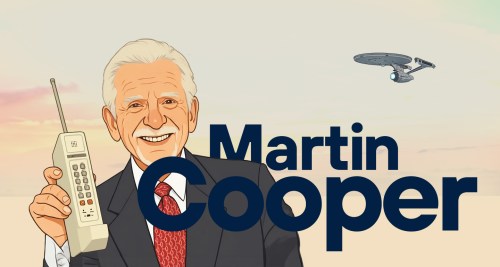
This period was characterised by the replacement of mechanical or analogue technologies with electronics, with the development of information technology and the birth of the Internet as its greatest exponents, not to mention other innovations such as the emergence of mobile telephony.
Marked by digitisation and automation, this third industrial revolution brought massive access to knowledge and connectivity, leading to the establishment of a globalised world characterised by increased productivity.
This era represented a transition between the industrial age and Industry 4.0 and had a particular impact on the United States, Japan and the nascent European Union.
Fourth industrial revolution
In 2011, at the industrial fair in the German city of Hanover, the term Industry 4.0 was coined to refer to the era marked by digital innovations and the technological revolution, a time in which new forms of communication and data have become hugely important.
The concept of Industry 4.0 is also used as a synonym for the Fourth Industrial Revolution, the successor to the three previous revolutions, whose main characteristics we have outlined throughout this article.
Artificial Intelligence, cybersecurity, the IoT, big data, Virtual Reality and Augmented Reality are some of the technological concepts most closely related to this stage.
Although the concept was born in 2011, as we have just mentioned, it became popular a few years later, specifically in 2016, after being used at the Davos meeting of the World Economic Forum that year.
Industry 4.0 at Telefónica Tech
Telefónica Tech helps industrial companies improve efficiency, quality, and operational continuity in their production environments, protecting critical assets and accelerating their digital transformation.
Its comprehensive offering drives Industry 4.0 by combining advanced connectivity, IT/OT integration, automation and mobile robotics, analytics and AI, hybrid cloud and edge computing, along with industrial management software (ERP) and a comprehensive approach to industrial cybersecurity to protect OT environments. This combination allows companies to optimize processes, strengthen security, automate operations, make real-time decisions, and move toward more efficient, resilient, and competitive models.