
For me, talking about digital education means talking about life. It means talking about what I see at home, accompanying my daughter in a world that is already deeply digital, and what I experience every day as a professional in a company that works to make this transformation responsible, humane and accessible to all.
For me, the importance of technology in education can be understood from two very different but complementary perspectives.
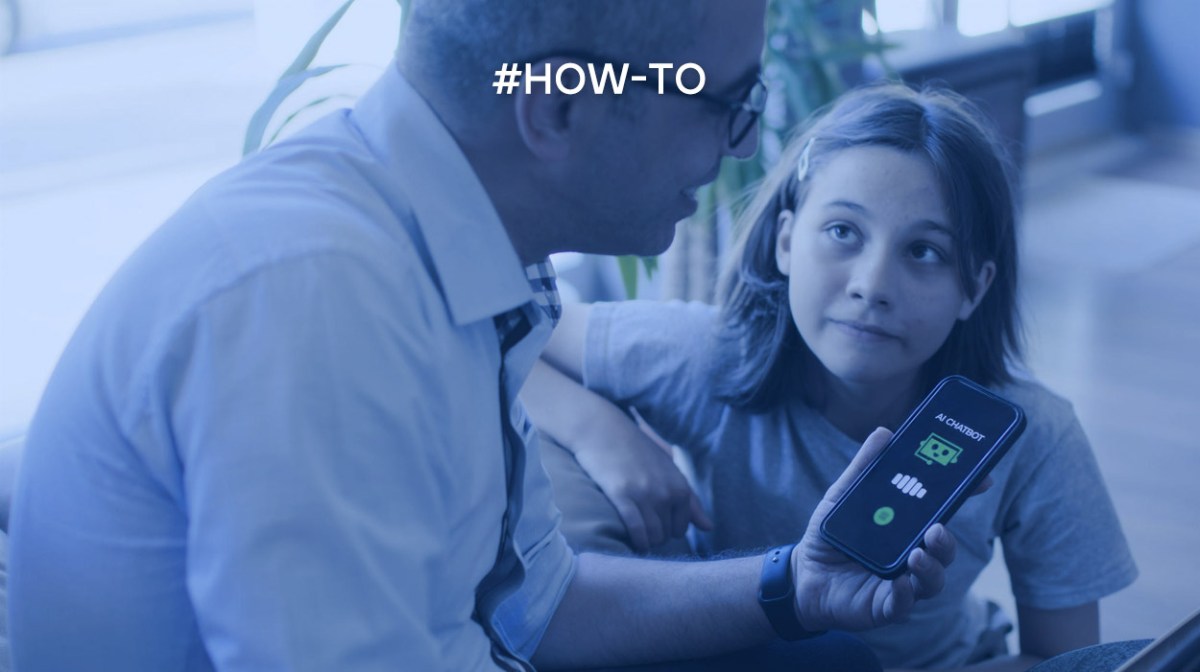
From a very personal perspective, as a mother, I see that our children already live in a deeply digital world. The way they learn, interact and understand the world is shaped by technology. They do not separate the “digital world” from the “real world”; it is all part of the same thing. And I believe that school cannot be a space that is alien to this, nor can we ask them to lead a double life: one at home surrounded by technology and another at school.
On the other hand, there is the professional aspect, and here I fully agree with what we advocate at Telefónica: technology is a driver of educational transformation, if used wisely. This is not about putting up more screens, but about preparing people to live, learn and work in the digital age, opening up opportunities and reducing gaps. Used well, it makes learning more accessible, more inclusive and much more connected to real life.
What are the benefits?
I see three major benefits:
- First, motivation. Students find it natural to learn with digital tools; when content is interactive and visual, their interest changes. They participate more, ask more questions. They learn because they want to, not because they have to.
- Second, personalisation. Here I speak as a mother: every child has their own pace and strengths. Technology, from AI to adaptive platforms, helps to adjust the journey, reinforce what is most difficult and enhance talents that would otherwise go unnoticed.
- And third, inclusion. Technology deployed sensibly levels the playing field. Projects such as ProFuturo demonstrate this in vulnerable contexts: there, technology is not a luxury, it is a door that opens up opportunities.
How these benefits are achieved
We often say that technology does not transform on its own; it transforms when it is well integrated and when it accompanies people.
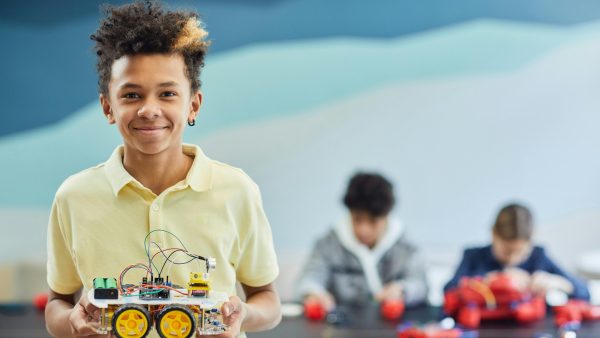
It starts with choosing the right tools: AI that adapts content to each student’s pace; virtual reality to provide experiences that a traditional classroom cannot offer; robotics to awaken computational thinking from an early age; and collaborative platforms that promote teamwork and autonomy.
However, without a solid foundation, it is impossible. At Telefónica, we see it every day: without connectivity, there is no transformation. That is why we work to ensure that schools have connected classrooms, high-capacity WiFi, 5G solutions and accessible devices, adapted to schools of different sizes and needs.
And something essential is missing: support. Cultural change is as important as technology. At Telefónica, we offer technical support, ongoing training and programmes that help schools, teachers and families navigate this journey with peace of mind. Technology should facilitate, add value and empower… but always hand in hand with people. That’s when it becomes a true ally.
What is the main objective of integrating technology into education?
The objective is very clear: no one should be left behind.
Technology must democratise access to knowledge, develop digital skills and prepare students for a future workplace that, whether we like it or not, will be digital.
At Telefónica, we talk about inclusive digital development: not just responding to the present, but opening up real opportunities for everyone, wherever they live and whatever resources they have.
What challenges does this relationship between technology and education face?
There are significant challenges, and as a mother, I also see them on a daily basis.
One of the major challenges is the gap that still exists between students. And I’m not just talking about Internet access, which remains essential, but also digital skills, the availability of suitable devices and the support that every child needs to use technology safely and effectively.
In addition, there is a challenge that is very present in many families: distraction and overexposure. Our children have access to millions of non-educational content, and that forces us to work on digital education, critical thinking and, above all, emotional balance so that technology does not overwhelm them.
It is also key to recognise that teachers are at the centre of this transformation. They need time, support and resources to integrate technology without it becoming an added burden.
Added to all this are reasonable doubts about privacy, security and the ethical use of AI. At Telefónica, we insist on responsible, progressive and safe use, always putting the well-being of students first.
And there is one last aspect that, as a mother, particularly concerns me: the loss of human interaction. Technology should expand possibilities and enrich learning, but it should never replace the bond between teachers and students, which remains irreplaceable.
What is needed for greater implementation of digital education?
As I mentioned earlier, there are several ingredients that I consider essential.
- Quality connectivity and comprehensive solutions. Connected classrooms, high-performance WiFi, accessible devices and ongoing technical support.
- Continuous training for teachers, students and families. Training in digital skills, best practices, cybersecurity, digital wellbeing and the pedagogical use of technology, so that it has meaning and purpose.
- Inclusive policies and programmes that reduce vulnerabilities. Telefónica, through its Foundation and ProFuturo, promotes digital education programmes in dozens of countries to reduce the educational and digital divide among children from vulnerable backgrounds. These programmes combine technology with innovative methodologies to develop digital skills, critical thinking and other key 21st-century competencies.
- Quality content. Digital resources aligned with the curriculum and designed for active, meaningful learning that is connected to reality.
And we need digital education that always puts people at the centre.
I will end as I began, on a personal note. As a mother, I want an educational environment that prepares my daughter for a digital future without losing the human essence that will set her free. As a professional, I work to make technology a real ally on that journey.
As a citizen, I believe in an education that leaves no one behind.
The education of tomorrow will not only be digital: it will be more human than ever. And that is where I want to be. Where we want to be.