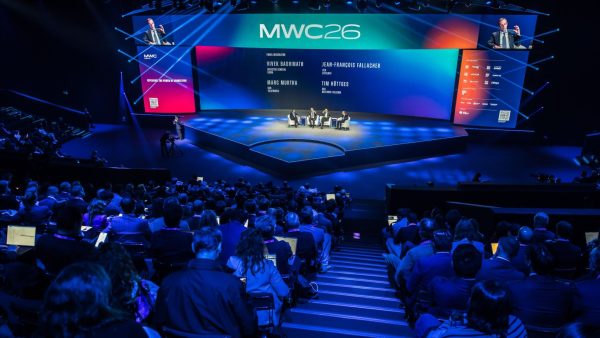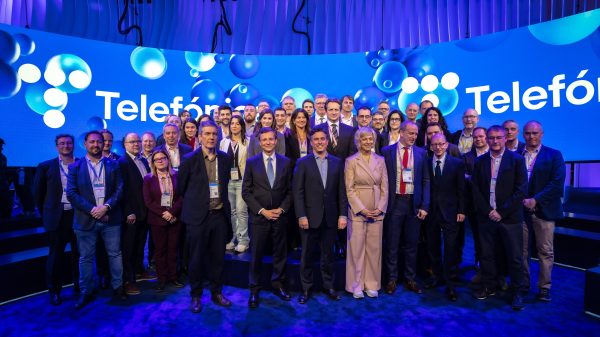

- The GSMA is responsible for organising the MWC, an event that will be held in Barcelona from 2 to 5 March 2026.
GSMA: what it is
GSMA stands for Global System for Mobile Communications Association, a global organisation representing more than a thousand companies and operators in the mobile ecosystem.
As the organisation explains on its website, its vision is ‘to unlock the full potential of connectivity so that people, industry and society can thrive’.
What are the pillars of the GSMA?
The GSMA operates under three main pillars: Connectivity for Good (to promote positive policies and outcomes in spectrum or facilitate digital innovation), Industry Solutions (supporting technology and interoperability to enable mobile telephony) and Events, such as MWC, whose 2026 edition will take place in Barcelona between 2 and 5 March.
Origin and history of the GSMA
The origin of the GSMA dates back to 1982, when the Groupe Speciale Mobile (GSM) was formed by the European Conference of Postal and Telecommunications Administrations (CEPT, Confederation of European Posts and Telecommunications) ‘to design a pan-European mobile technology’.
Emerging as such in 1995, it began as the GSM MoU (Memorandum of Understanding) Association with the objectives of facilitating cooperation between countries implementing GSM technology, maintaining standards, supporting interoperability and promoting innovation in the mobile industry.
The year 1989 brought the news that the Groupe Speciale Mobile, which was transferred to a technical committee of the European Telecommunications Standards Institute (ETSI), defined the GSM standard as the internationally accepted digital cellular telephony.
Returning to the GSMA, it is an organisation that, although now international in scope, had its origins in Europe, as mentioned above, with the milestone of Telstra Australia joining as the first operator outside the Old Continent in 1993.
According to the organisation’s website, as the connectivity industry has grown and evolved, so has the GSMA itself, facilitating protocols and standards in mobile technology, from 4G and 5G to 6G.
GSM technology
GSM (Global System for Mobile Communications) technology reached a new milestone on 1 July 1991 in Finland with the first digital mobile phone call, replacing 1G analogue systems.
This event marked the beginning of the 2G era, characterised by the introduction of voice and data standards, such as SMS, with the first ever message being sent in 1992.
This original GSM technology from 1991 was developed due to the need for unity between companies and countries to enable digital mobile voice calls, which led to the emergence of the first global networks, thanks to the common standard and unification of GSM, along with GSM roaming and its convenience for travellers, a key factor in the global success of the GSM platform.
GSMA and MWC
The MWC is the most prominent annual event organised by the GSMA, a trade fair that originated at the 1987 GSM World Congress in Brussels with the ‘Pan Europe Digital Cellular Radio’ conference, although its characteristics were different from the current format.
Later, in 1990 in Rome, the GSM World Congress took on a format more similar to the current one.
Throughout the history of the Mobile World Congress, it has had numerous itinerant venues, such as Nice, Lisbon, Athens and Berlin, and was held in Madrid in 1995 before settling in a permanent location.
Specifically, the following year, the GSM World Congress was established in a venue that lasted for nine years, until 2005: the French city of Cannes. This location saw the consolidation of the event, resulting, among other things, in a huge increase in attendance, which increased tenfold: from around 2,000 attendees to 24,000.
After leaving France, 2006 brought the novelty of the event’s establishment in Barcelona, sharing the location of the Mobile World Congress with the neighbouring town of Hospitalet de Llobregat until the present day.
Therefore, the 2026 edition will mark the 20th anniversary of the event in the Catalan capital, given that the 2020 edition was suspended due to the coronavirus pandemic.
Telefónica and the GSMA
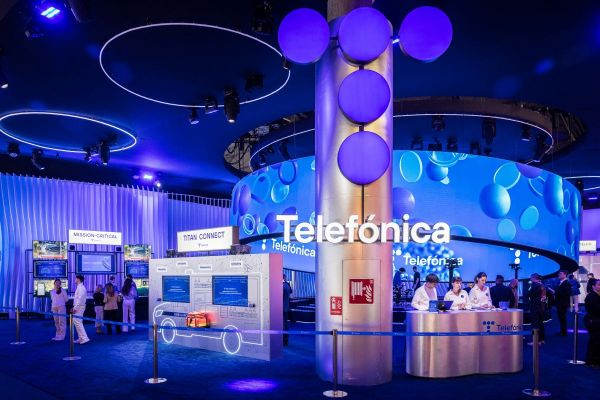
The president of Telefónica, Marc Murtra, joined the GSMA Council in February 2025.
In addition to this link, the operator is also part of Open Gateway, a multi-telco initiative led by the GSMA that allows companies access to advanced network capabilities and offers new business opportunities through standardised global APIs.
Another example of the relationship between Telefónica and the GSMA is the operator’s adherence to the mobile industry association’s “Climate Transition Guide”, a document aimed specifically at mobile and fixed network operators in the telecommunications sector, but which also serves as a reference for both the sector’s supply chain and investors.