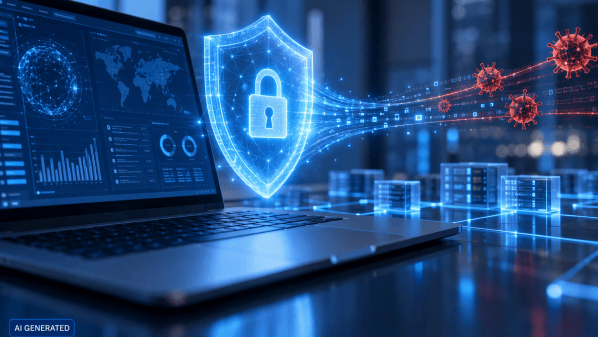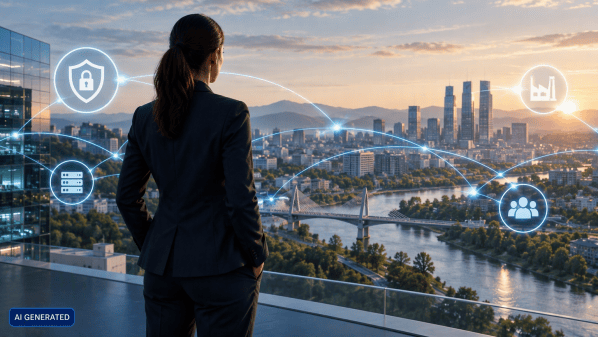

Experience with companies that have suffered serious cyberattacks shows that enterprise cybersecurity goes beyond technological protection. When an incident occurs, business continuity, economic impact, customers, employees, and the assets built up by the organization all come into play. In the face of increasingly sophisticated threats, managed security models combine technology and specialized expertise to strengthen detection and response capabilities.
Enterprise cybersecurity is not just about protecting systems and technology—it also aims to preserve business continuity and strengthen organizations’ ability to respond to unexpected incidents.
What does experience teach us about the true impact of cybersecurity risks?
Throughout my years at Telefónica, I have worked with companies of all sizes and across all sectors. And there is one thing that experience has taught me: we never fully appreciate a risk until we see its consequences up close.
What happens in a company when it suffers a serious cyberattack?
I have witnessed this firsthand with companies that have suffered very serious cyberattacks.
At those moments, the conversation quickly shifts away from technology. The concern becomes how to resume operations, what the economic impact will be, what happens to customers and employees, and just how much damage could be done to the assets built up over the years.
Why is cybersecurity key to business continuity?
That’s where cybersecurity takes on a whole new dimension.
We’re not just talking about protecting systems. We’re talking about protecting business continuity.
Why might technology alone not be enough to counter cyber threats?
And there’s another important point to consider. The growing sophistication of threats makes it increasingly difficult to address cybersecurity with technology alone. It requires knowledge, experience, and specialists dedicated to monitoring, interpreting, and responding.
Not all companies need to develop these capabilities in-house. What matters is having access to the best experts when they’re truly needed.
What does a managed security model like Telefónica MxDR offer?
That is precisely why I believe the shift toward managed security models like Telefónica MxDR is so important: a service that continuously monitors, detects, investigates, and responds, combining XDR technology, artificial intelligence, and specialists from Telefónica’s SOCs.
Because technology is essential, but there is something even more important: who is behind it when the unexpected happens.
Why does investing in cybersecurity mean protecting the company?
After so many years, you learn that investing in cybersecurity isn’t about protecting a company’s technology.
It’s about protecting the company.
Frequently Asked Questions
What is enterprise cybersecurity?
In the context of this article, enterprise cybersecurity goes beyond protecting technological systems. It’s also linked to safeguarding business continuity against the consequences of a serious cyberattack.
How can a cyberattack affect a company?
A serious cyberattack can raise concerns regarding business recovery, economic impact, customers, employees, and the assets the company has built up over the years.
Is technology alone enough to tackle cyber threats?
The sophistication of threats makes it increasingly difficult to address cybersecurity through technology alone. The article also highlights the importance of knowledge, experience, and specialists dedicated to monitoring, interpreting, and responding.
What is Telefónica MxDR?
Telefónica MxDR is a managed security model that continuously monitors, detects, investigates, and responds, combining XDR technology, artificial intelligence, and specialists from Telefónica’s SOCs.
Do all companies need to develop advanced cybersecurity capabilities in-house?
Not necessarily. The author’s view is that not all companies need to develop these capabilities in-house and that what matters is being able to access specialists when they are truly needed.