- The telegraph and telephone represented major advances in global communications in the 19th century.
- Emerging in the late 19th and early 20th centuries, radio and television greatly changed people’s habits in the following decades.
- The rise and popularisation of the Internet between the late 20th and early 21st centuries has forever changed the way humanity communicates.
Telecommunications can be defined as the systems and technologies that enable the transmission and reception of information, understood as images, data or videos.
Telecommunications began to take on special relevance in the 19th century with the invention of the telegraph, although primitive forms of communication, such as smoke, the sound of drums or fire, existed before that.
In this article, we will learn about the advances in the history of telecommunications, considering the birth and development of certain technologies of special relevance to humanity as milestones.
When did the first telegraph communication take place?
Although there had been some previous attempts and advances, the great milestone in telegraphic communication occurred on 24 May 1844, when Samuel Morse sent ‘What hath God wrought’ from Washington DC to Baltimore, according to the ITU website.
This 60-kilometre journey across US territory was an extraordinary event and had enormous implementation and use in the following decades, with the press and railways being the first sectors to adopt this technological advance.
Using a transmitter that sent electrical pulses and a receiver that received them, the dots and dashes were translated into a set of symbols converted into alphanumeric characters.
These short messages meant that, for the first time in human history, long-distance communication could be generated efficiently, quickly and moreover, reciprocally.
As a curiosity, we could point out that the last telegraph network remained active until 2013—specifically, the last transmission took place in India on 14 July of that year—although it had already become an obsolete system in the face of the rise of other numerous forms of communication that were faster, more sophisticated and more economical.
When was the telephone invented and who invented it?
The history of the telephone is another major milestone of the 19th century in the field of telecommunications, although its origin is not without controversy: for years, Alexander Graham Bell was considered its inventor, as he was the one who patented it in 1876.
However, in 2002, the United States Congress credited Antonio Meucci with the invention (albeit posthumously, of course), as he had used the “teletrofono” in 1854 to communicate with his sick wife inside his home.
Beyond the discrepancies about who the inventor is, what is undeniable is the impact of the telephone from that moment until today.
Although landline telephony as such no longer has the impact it had for decades, it remains the predecessor of mobile telephony, the basis of a very high percentage of communications throughout the world today.
Who invented the radio and when?
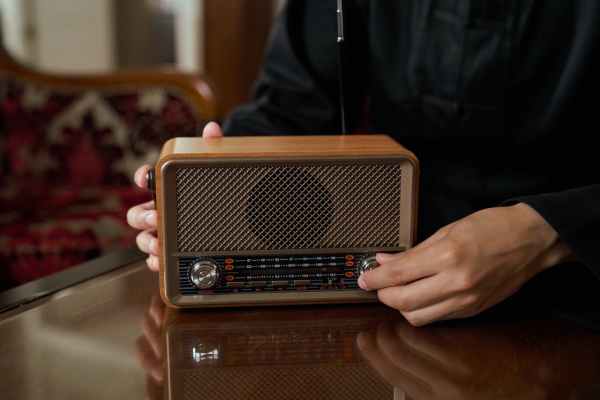
At the dawn of the 20th century, on 14 May 1897 to be precise, Guglielmo Marconi carried out the first radio transmission in history: he sent the first wireless communication across the open sea at a distance of six kilometres. Two years later, he achieved the milestone of communicating between France and the United Kingdom across the English Channel.
Radio communications represented a new milestone, although, as we explained in a post about World Radio Day, the authorship attributed to Marconi is also disputed, as some consider Aleksandr Popov or Nikola Tesla to be the inventors.
In any case, what is indisputable is that in 1909 Marconi received the Nobel Prize in Physics—shared with the German Carl Ferdinand Braun—for his contribution to radio communications.
Unlike the telegraph, and despite ever-increasing competition, radio remains relevant in the 21st century.
When were the first television broadcasts and who was behind them?
As with the other advances in telecommunications discussed in this article, the history of television cannot be attributed to a single name.
However, John Logie Baird should be recognised as the inventor of electromechanical television and the person responsible for the first television broadcast in history on 2 October 1925, with the projection of a doll, although this milestone took place in a London laboratory.
A year later, the same Scottish scientist also gave the first public demonstration of moving images to an audience.
Many other innovations, such as the arrival of colour television and regular broadcasts, meant that this device went from being something elitist in its origins to achieving enormous popularity throughout the world in the 1950s and 1960s, to the point where the layout of living rooms in homes often depended on where this device was placed.
When were mobile phones and smartphones born?
Taking up the baton from telephony, the birth of mobile telephony marked a new milestone in the world of telecommunications.
From the first mobile phone call in history in 1973 to the present day, the evolution has been enormous, with parallels to other previous technologies.
From being a status symbol and something exclusive to those with purchasing power (as a curiosity, it is worth remembering that the first mobile phone marketed in 1983 cost almost $4,000) to today, when there are more mobile connections than people on the planet, the change is more than evident.
This has also been greatly aided by the advancement of smartphones, whose development in recent times since the first smartphone was born in 1994 has radically changed the world of communications.
When was the Internet born?
But without a doubt, the cornerstone of advances in the world of telecommunications in recent decades has been the Internet.
From its birth in the Cold War era as Arpanet to the present day, passing through milestones such as the first website in history in the early 1990s, the uses of the Internet are enormously varied.
The 6 hours and 38 minutes that each person on the planet spends on average using the Internet every day is a highly significant figure that demonstrates the importance of the network of networks for humanity as a whole, with more than two-thirds of the planet’s inhabitants being users.
Another milestone in telecommunications, and one that is inherently linked to the Internet, is the birth of social networks, also in the 1990s, specifically in 1997.
One way to immerse yourself and learn first-hand about the history of telecommunications is through the permanent exhibition “Exponential. From analogue to digital” by Fundación Telefónica, which can be visited at the Espacio Fundación in Madrid.
Frequently asked questions
On 24 May 1844, with a communication between Washington DC and Baltimore.
On 14 July 2013 in India.
After more than a century of debate, in 2002 the US Congress ruled that it was invented by Antonio Meucci, even though it was Graham Bell who had patented it.
Alexander Graham Bell, in 1876.
Guglielmo Marconi carried out the first radio transmission in history on 14 May 1897.
John Logie Baird is the inventor of electromechanical television and responsible for the first television broadcast in history on 2 October 1925, with the projection of a doll, although this milestone took place in a London laboratory.
The first mobile phone call was made in 1973 by Motorola engineer Martin Cooper, while the first smartphone was the IBM Simon in 1994.
It was born in 1969 as ARPANET, the US military network, but it was unified and popularised in the 1980s and 1990s, thanks to the adoption of TCP/IP protocols in 1983.
The first social network was SixDegrees, born in 1997.