
On 1 October, Fundación Telefónica celebrated International Older Persons Day with a talk at its Gran Vía venue entitled Technology and older persons: the challenge of the digital divide.
The meeting brought together experts in longevity, technology companies, social organisations and representatives from the public sector to discuss one of the most important challenges we face today: the digital inclusion of older people.
Technology has no age
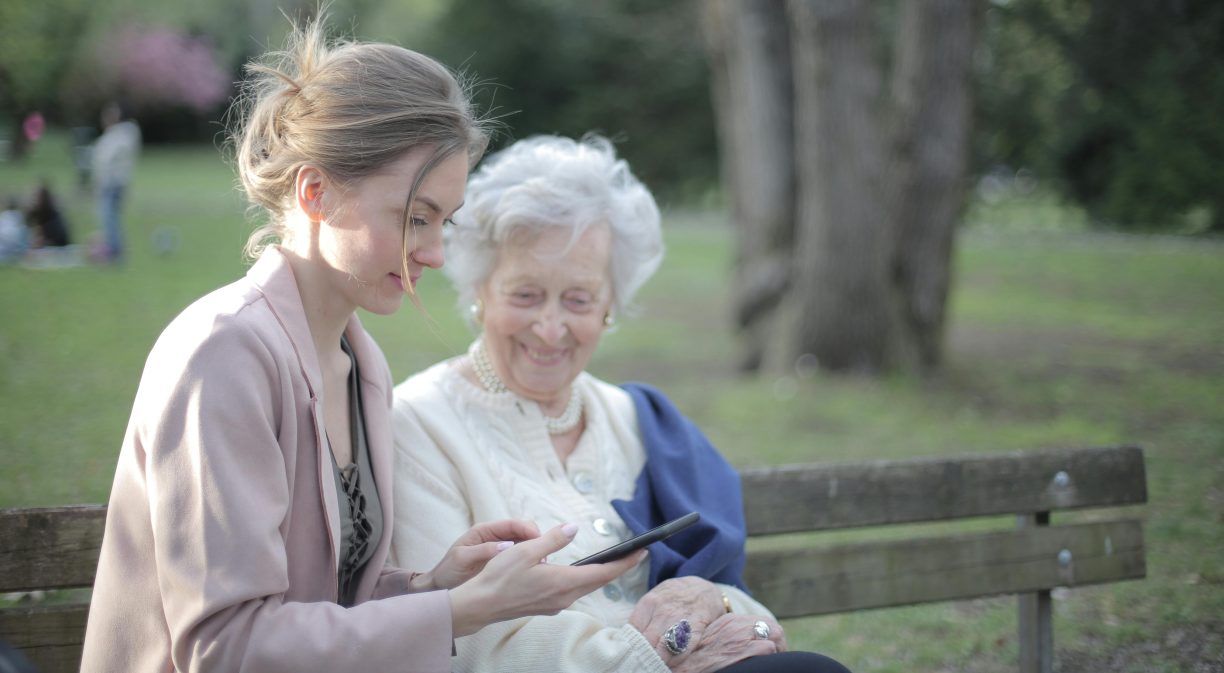
The day began with a story that reminded us that curiosity knows no age. Luisa Alli, deputy director to the president of Fundación Telefónica, shared how her father, who is over 80 years old and has three doctorates, asked his grandson for help learning how to use ChatGPT.
‘Curiosity, time and affection worked… but we also saw what doesn’t work: fear, lack of assistance and the complexity of some tools,’ she reflected. And she sent a clear and direct message: ‘We cannot leave anyone out of this digital revolution. It is a right’.
A phrase that, more than a statement, sounds like a commitment. Because, deep down, we should all be asking ourselves the same question: are we doing enough to ensure that no one is left behind?
The public sector as a driver of inclusion
The first round table focused on the important role played by public administrations in ensuring that older people have greater access to and can make better use of digital technologies. From programmes such as Reto Rural Digital (Digital Rural Challenge) and CyL Digital, to service centres in rural municipalities, everyone agreed that technology should facilitate, not exclude. One phrase summed it all up: ‘Let’s not put the burden of proof on older people, but on the institutions that design inaccessible websites.’
Innovation with purpose
Technology can protect, accompany and connect… if it is designed with empathy.
This was demonstrated by the initiatives shared at the second table: from tools that detect digital scams to smart homes designed to provide care with voice, emotion and closeness. This table made it clear that innovation must have a soul: ‘technology can complement care, but it can never replace human warmth.’
Reconectados: when inclusion is personalised
Next up was the Reconectados programme from Fundación Telefónica, one of the big stars of the day. Its manager, Silvia Movellán, shared the keys to a model that has already trained more than 30,000 older people.
‘We don’t attract users, we attract needs. Every older person is unique. You can’t make coffee for everyone,’ she explained. The programme adapts to each person’s pace: from those who barely dare to turn on a mobile phone to those who already want to try artificial intelligence or even the metaverse. When digital inclusion is personalised, it becomes an investment in social capital… and in lives that change.
The silver-haired revolution
To close the day, economist Iñaki Ortega offered a provocative and hopeful look at active ageing.
“The silver-haired economy is an opportunity. There are more self-employed older people than young people. They are the ones who consume the most, vote the most, and have the most experience. Why don’t we design products, services, and policies with them in mind?” he asked. It’s a question that should be at the heart of any innovation strategy… and any conversation about the future.
A question of rights
The closing remarks were given by Rosa Martínez, Secretary of State for Social Rights, who reminded us that ‘the digital inclusion of older people must be a priority for public policy.’ Because it is not just a question of access to technology, but of guaranteeing rights, autonomy and participation. Digitalisation is not a privilege, it is a new way of exercising citizenship.
My personal view
After listening to all these experts, it is very clear to me that the digital divide is not just a technical problem, but a deeply human one.
It has to do with how we want to age, how we care for those who cared for us, and the kind of society we decide to build, day after day. My mother, for example, does not want to be left behind. She does not want the world to move forward without her. She wants to remain connected, informed, useful. And we — as children, as citizens — have the responsibility, but also the opportunity, to accompany her on that journey.
Because, as was repeated several times during the conference: technology has no age. But it does need something that no machine, however advanced, will ever be able to programme: empathy.