
- From the first smartphone to the present day, both the size and features of smartphones have evolved enormously.
In answering the question of what a smartphone is and what it is used for, we can find some of the characteristic features that define it: a smart mobile phone that offers advanced communication services and also has a higher degree of connectivity than conventional mobile phones.
Smartphones were born in the 1990s and their features have improved significantly over this period, while their use has multiplied exponentially.
But what characteristics define them?
Evolution of smartphone features
Before going into detail about the features of smartphones and taking advantage of the fact that we mentioned their origin in the 1990s, let’s take a look back at the first smartphone to appreciate how this type of mobile device has evolved.
The IBM Simon is considered to be the first smartphone in history. Although it did not enjoy great popularity, with only 50,000 units sold, it did offer other uses that are now commonplace but were revolutionary at the time, such as managing faxes and emails. This went beyond simply making and/or receiving calls, which was the only function available at the time.
This smartphone had some peculiarities that also set it apart from its successors, as it measured 20 centimetres high, 6.4 centimetres wide and almost 4 centimetres thick. Weighing over half a kilo and with a maximum battery life of just one hour, it was also vastly different from today’s smartphones.
Another new feature of this mobile phone was the touch screen and other uses – which we would now classify as applications – such as the calculator, calendar and the aforementioned fax and email.
Current features of smartphones
Although their extremely high usage rates mean that practically everyone knows what a smartphone is and what its features are, let’s review the main ones.
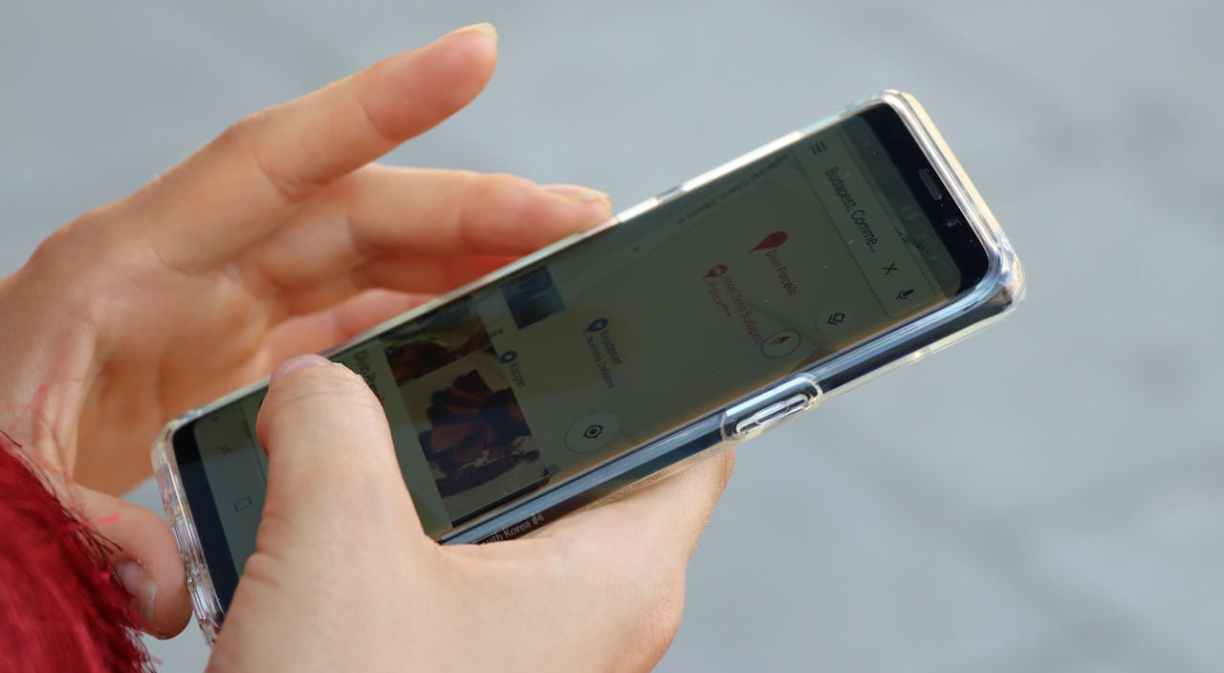
On the one hand, there is a main interface for controlling and viewing the device via a touchscreen.
On the other hand, the operating system (OS) is the main software responsible for managing the device’s hardware and, in turn, allowing applications to run, with several of them able to run at the same time.
The applications themselves are another feature of smartphones—although not unique to them, as other devices also have them—that allow for numerous uses of very different kinds, from managing schedules to entertainment in many different forms, including bureaucratic or banking tasks and social networks.
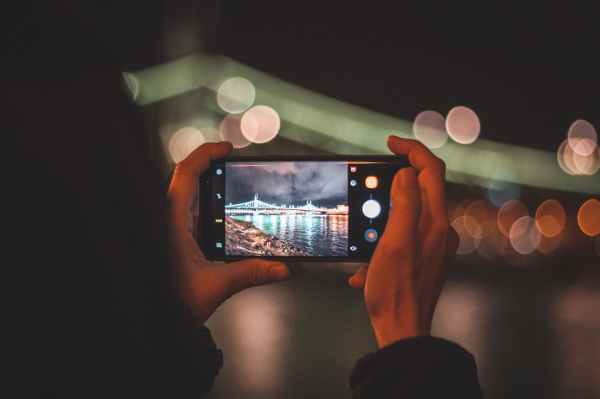
The audiovisual capabilities of smartphones are another feature that sets them apart from conventional mobile phones. The development of cameras (both front and rear) has made photography and video just a click away, without the need for other electronic devices specifically designed for this purpose.
Finally, connectivity is a fundamental feature of smartphones, as it allows instant communication from virtually anywhere.
Technological concepts such as mobile data, 4G or 5G, Wi-Fi or Bluetooth – in whose development the actress and inventor Hedy Lamarr played a major role – are examples of how connectivity is completely integrated into our daily lives.
Smartphones Movistar
For those who prioritise having the latest features and capabilities, Movistar offers the Movistar Swap (in Spanish) service.
In an increasingly competitive market, Movistar offers this exclusive and pioneering service that allows customers to enjoy the latest iPhone or Samsung model every two years, with clear savings compared to other options on the market. Movistar Swap, available to both existing and new customers, guarantees a simple renewal experience and access to the latest models so that users can always be at the forefront of technology.