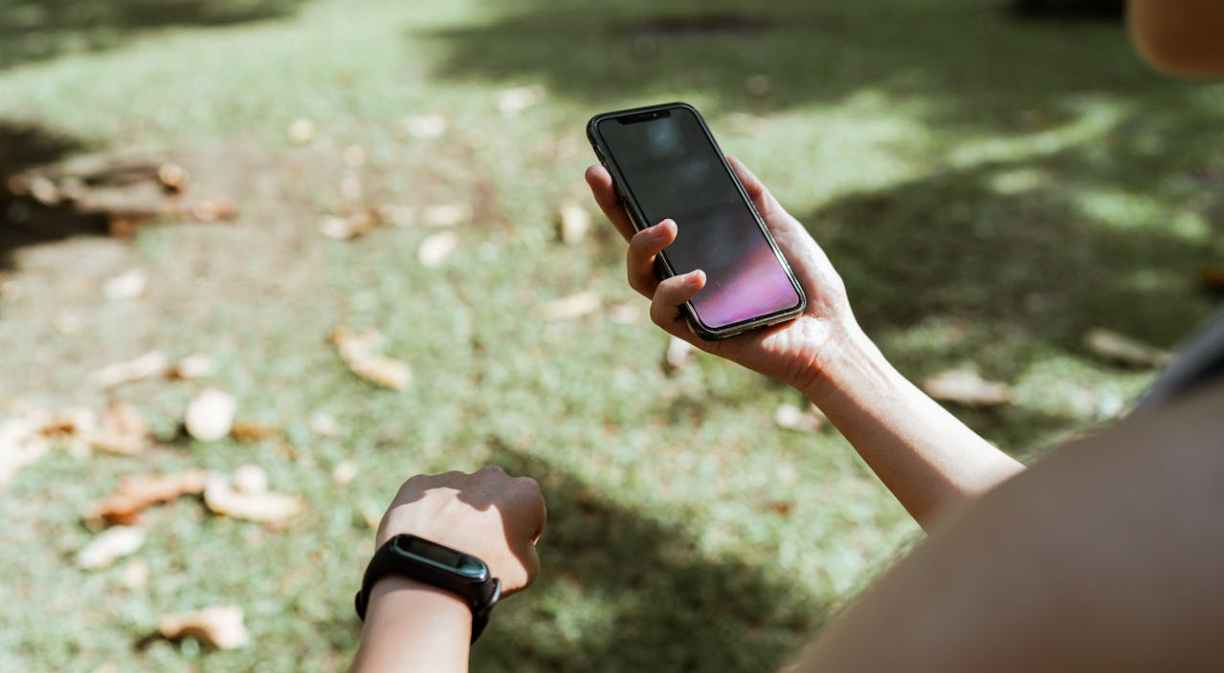

- Although there are many types, mobile phones—specifically smartphones—are the most widely used devices of this type.
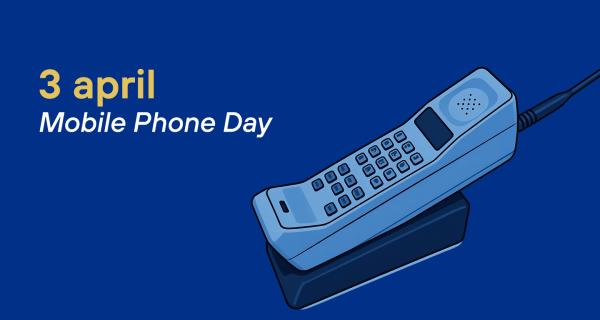
To mark Mobile Phone Day, which is celebrated on 3 April, we are going to talk about what mobile devices are and what their main features are. Mobile phones are one of the most widely used examples.
A mobile device is a small, lightweight, portable electronic device designed for communication, data processing or Internet access.
What are the main features of mobile devices?
One of the main features is portability, as they are small in size, making them easy to use on the move—either with one or both hands—and convenient to carry around.
The connectivity of this type of device is marked by its connection to wireless networks that do not require cables for voice and/or data transmission. Wi-Fi, 5G and Bluetooth are some examples.
Energy autonomy is another feature of mobile devices, giving users great independence with the use of internal rechargeable batteries.
While it is true that the fact that they run on rechargeable batteries may mean that their continuous use is limited, the reality is that enormous advances have been made in this area. As an example, remember that in the first mobile phone in history, the battery lasted barely half an hour.
On the other hand, interactivity via touch screens—in most cases—is another feature of today’s mobile devices for interacting with the corresponding operating systems.
Mobile devices are also characterised by sensors and powerful hardware that incorporates processors, RAM, and internal storage.
What are mobile communications?
Mobile devices work thanks to mobile communications, which can be summarised as voice and data being converted into digital signals transmitted to an antenna and sent through the transport layer to the end user.
To carry out this process, the architecture of a mobile network is organised into several layers: access layer (uses base stations and antennas to connect mobile devices to the network), transport layer (transfers data between base stations and the network core) and core layer (manages data routing and uses technologies such as virtualisation or network slicing to offer personalised services).
Mobile communications enable basic tasks such as sending messages, making calls or connecting to the Internet.
What types of mobile devices are there?
When we think of this type of device, the mobile phone—and in recent years, more specifically the smartphone—is the undisputed leader.
According to the Digital 2026 report by We Are Social, 97.4% of the world’s population has a smartphone, and 97.5% has a mobile phone in general.
Far below is the usage rate of another of the most recognisable mobile devices, the tablet, which has a usage rate of 33.1% of the world’s population.
Slightly below, at 33% to be precise, are smart wrist devices, the most representative of which is the smart watch, with 27.8%.
The other major mobile device, the laptop, is not broken down in this report, as its use is aggregated with desktop computers without distinguishing between one type or another. The sum of both, however, is 56.2%.
Movistar mobile devices
Movistar offers a wide variety of mobile devices (in Spanish) of different types, such as smartphones, tablets, smart watches and laptops.
Purchasing these mobile devices from Movistar can mean exclusive benefits such as interest-free financing, fast delivery (or in-store collection), an official warranty and personalised technical support.
In addition, Movistar has recently launched Movistar Swap, a device renewal programme that allows customers to get the latest iPhone and Samsung models.