
Inspiring examples of digital transformation
We will bring the concept of Digital Transformation down to earth in the real world. To do so, there is nothing better than learning about some experiences of digitisation with a social character.
VinclesBCN – Inclusive technology against loneliness
The project is based on the principle that ageing is a European and urban challenge and, therefore, a challenge for cities. Barcelona has more than 300,000 inhabitants aged 65 or over, of whom around 100,000 are over 80. Barcelona City Council, under Mayor Xavier Trias, was the driving force behind the project, an initiative to combat loneliness among elderly people and people with disabilities through a trusted network and a mobile application.
The VinclesBCN initiative won an international Bloomberg Philanthropies Mayors Challenge award in 2014, highlighting the importance of combining technology and care for people. Currently, VinclesBCN has become a service of the Social Rights Department of Barcelona City Council, which combats unwanted loneliness, strengthening the social relationships of elderly people who feel lonely and improving their well-being through new technologies.
BLETA – Combating the digital divide
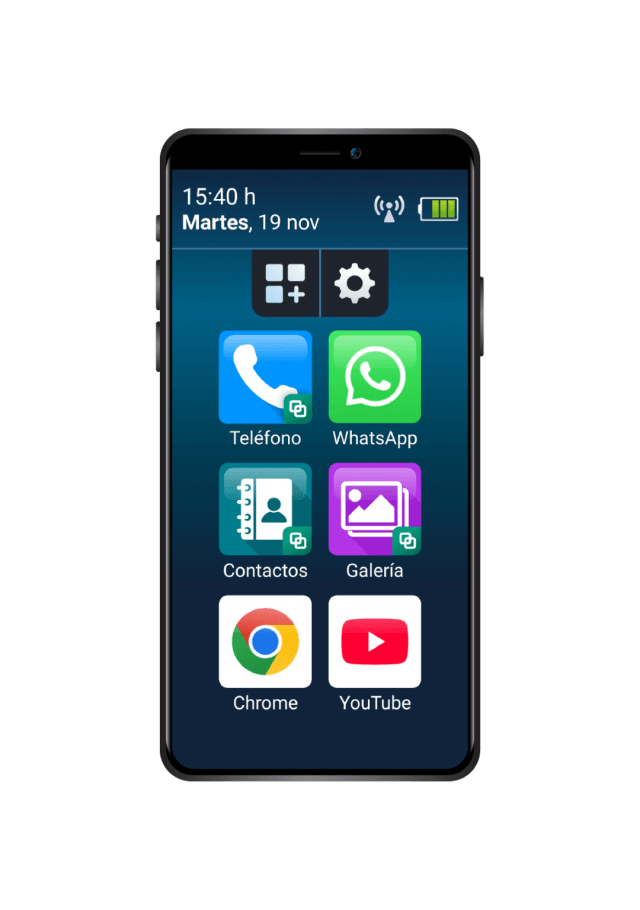
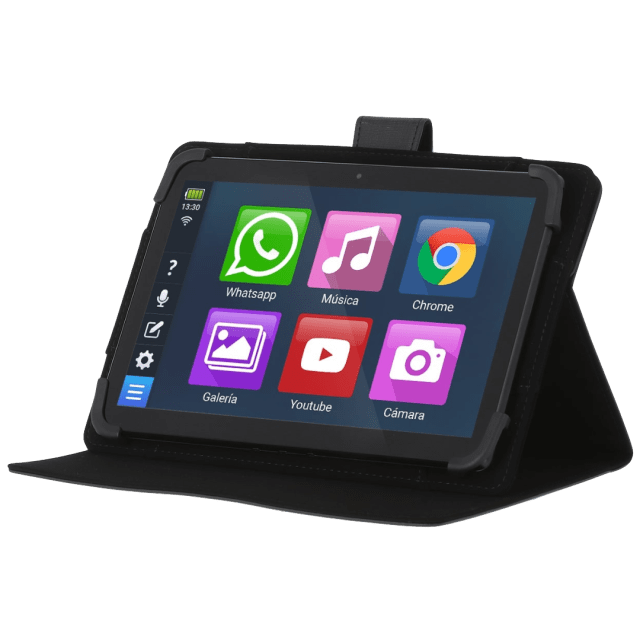
During the pandemic, a gesture of solidarity, donating tablets to nursing homes (650 devices to more than 54 health centres), showed that many were unable to use them effectively. This discovery prompted reflection on the lack of truly accessible technologies for this part of the population. Based on this reality, three young engineers (Isabel García, Adrià Roca and Gerard Pinar) launched the BLETA project. They designed a tablet with an intuitive and simplified interface, specifically adapted for users with limited digital skills. They also launched an app that transforms any Android mobile phone into an easy-to-use device. Making life easier is also a way of caring.
‘Un clic, i P@rlem?’ – A step towards relational autonomy
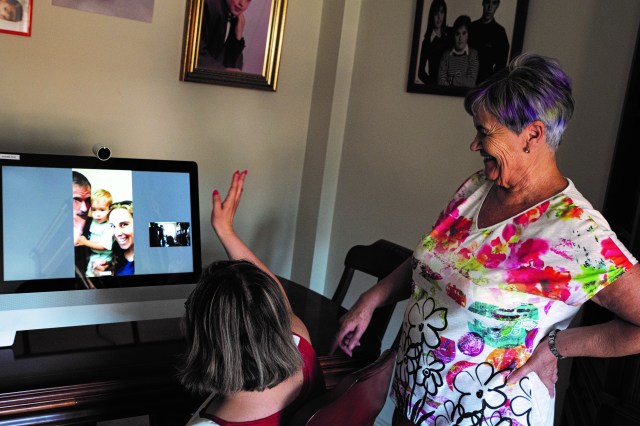
The ‘Un clic, i P@rlem?’ (‘One click and let’s talk?’) initiative is the result of a collaboration between the Mollerussa City Council, ACUDAM (Associació Comarcal Urgell d’Ajuda al Minusvàlid) and the CISCO Innovation Centre (Barcelona) to carry out a project in which technology is used to promote relational autonomy and the inclusion of people with intellectual disabilities. This is a pioneering project in Spain, which reduces isolation and promotes emotional well-being through the use of state-of-the-art tablets with an accessible interface adapted for the participants. Working towards a more inclusive and connected future for everyone
Positive and transformative impact:
- Improves autonomy and communication.
- Facilitates video calls with family members and internal meetings.
- Bridges the digital divide with intuitive and personalised technology.
Participants were selected based on the following criteria:
- Diagnosis of moderate or mild intellectual disability.
- Ages between 48 and 77 (average age 63). People who do not have a mobile device and find it more difficult to access the digital world.
- Limitations in socialising independently.
- Interest in activities and interaction with the environment.
- People who attend the Occupational Therapy Service and live at home or in a care home.
e-Estonia – 21st-century public administration
Estonia is a Baltic country with a population of approximately 1,370,000, which gained independence from the former Soviet Union in 1991. Starting from a very difficult economic and social situation, this Baltic republic made a strong commitment to technology and digital transformation.
Since the mid-1990s, the country has promoted the integration of the internet into the public and private spheres through the e-Estonia initiative, which includes, among other things, the digitisation of government services, online voting, the promotion of digital literacy in schools and the promotion of national cybersecurity. ‘Move data, not people.’ Hannes Astok, Executive Director of the e-Governance Academy
In 2000, the government declared access to the Internet a human right, facilitating connectivity even in rural areas of the country. Today, Estonia is considered the most digitised country in the world.
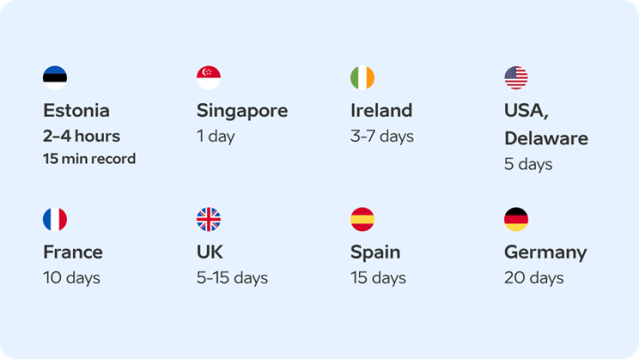
‘We must build government services that are so simple that any grandfather or grandmother can start using them intuitively.’ Hannes Astok, Executive Director of the e-Governance Academy. As an example of this, Estonia is the only country in the world where anyone from anywhere can set up a company without being physically present, and at record speed. The company is registered in just 2-4 hours.
RECONECTADOS – Digital skills within reach of the elderly
In Spain, 59% of people aged 65 to 74 lack basic digital skills, a figure that rises to 92% for those over 75. In both age groups, the risk of digital social exclusion increases in rural areas.
The Telefónica Foundation’s Reconectados programme was launched in October 2023 with an official launch in Madrid. It is a free project to improve the digital skills of older people and their environment, offering face-to-face workshops, online training and resources for family members and professionals, covering topics such as mobile phone use, cybersecurity, artificial intelligence, online banking and social networks, helping older people to ‘reconnect’ with the digital world. Since its launch in 2023, the Reconectados programme has benefited more than 50,000 older people
Reconectados Rural
Reconectados Rural is an initiative of the Telefónica Foundation, funded by the EU, to reduce the digital divide in rural areas by improving the digital skills and mobile phone use of older people in rural areas with fewer than 5,000 inhabitants in Spain.
The programme trains people over the age of 65 during 2025 and 2026 in Castilla-La Mancha, Castilla y León, Extremadura, the Community of Madrid and Andalusia. The actions carried out improve their autonomy, communication and access to public services, thus combating loneliness and promoting active ageing.
Acknowledgements
I would like to thank the following companies and institutions for their collaboration: ACUDAM (Associació Comarcal Urgell d’Ajuda al Minusvàlid), Barcelona City Council (Department for the Promotion of Older People), BLETA, CISCO (Barcelona Innovation Centre), the Estonian Embassy in Spain, the Telefónica Foundation and territoris.cat.