
For years, our funnels have always led us to have a clear objective: to get something from a user, which has usually taken the form of getting a click. A click on the website, a click on a form, a click on checkout.
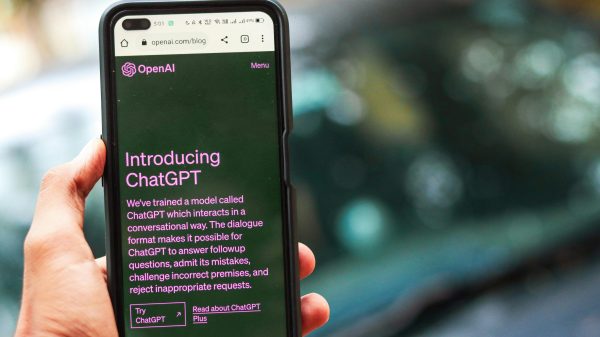
However, we are now experiencing a revolutionary change in user behaviour driven by artificial intelligence agents. LLMs such as ChatGPT, Gemini and Copilot have completely transformed the search experience. Today, consumers can discover a brand, understand whether that brand meets their needs and compare it with other alternatives. And all this in a single query without having to click.
This new model is what we call the zero-click customer journey, which occurs when the user is within a platform and finds all the information they need without having to click on an external link. It is not just a change in SEO, it is a change in how decisions are made.
What is the zero-click customer journey?
The platforms we use are increasingly concentrating more value within their ecosystem and, at the same time, users prefer to consume contextual and native information. Without friction and without unnecessary jumps. All of this is leading us to new journeys that are more distributed, less linear and without the need for intermediate steps.
Now, it is Google itself that responds directly with text to our questions, and networks such as TikTok allow us to view, compare, and decide between products. According to study data, around 60% of all global searches do not generate an external click, and on mobile devices, this increases to 77%. This shows us that it is not just a trend, but the current predominant behaviour.
In this context, clicks are no longer a key indicator for measuring the success of your website. Because now users can learn about your brand, trust it and choose you without ever having visited your website. And that is why visibility, clarity and consistency of message are more important than traffic.
Traditional customer journey vs AI customer journey
For years, we have designed funnels with a clear objective that was covered in several phases. From discovery and consideration to decision and conversion. In each phase, we had multiple clicks and steps to advance to the next level.
All of this was measured with different KPIs such as traffic, clicks and conversions. With this approach, we put the website or app at the centre of the journey while generating data to track and optimise.
Today, thanks to LLMs, users start their funnel within the AI itself and not on a SERP. So awareness, consideration, and decision can be carried out without leaving that prompt. The information is much more personalised, contextual, and immediate, which speeds up the process and combines several stages of the funnel into a single step.
However, this also leads to a journey with less visibility and, therefore, more difficult to measure with traditional methods.
Challenges of the zero-click customer journey
This new model brings us a wide range of opportunities to innovate, but it also poses a number of challenges that we must keep in mind when designing the user experience.
- Less control: with a journey that takes place partly on a single platform, we lose some of the information collected by the user. So when the user arrives at our site, we must have done our homework well so that their experience aligns with what they have already learned and expected.
- Difficulty in measurement: much of the process takes place outside our environment, where we do not have the data to know what their concerns are. Therefore, once they enter our environment, we must quickly add value to reinforce their trust and loyalty.
- Increased competition for visibility: AI prioritises quality, reliable and authoritative responses. Only those sites that position clear and well-structured content will be part of those responses.
From optimising funnels to building authority
The zero-click customer journey does not eliminate the website, the app or traditional conversations, but it does distribute the value of the click to more native, conversational and distributed forms.
Our focus should not be solely on generating traffic, but on occupying a relevant position within the narrative that AI uses to respond to users’ needs. This requires content that first solves and then converts, clear messages at all touchpoints, and metrics that include influence and not just clicks, because in the new customer journey, the decision happens before we can measure it.