
- Remote operation is one example of how this technology has a positive impact on Industry 4.0.
Before learning how Augmented Reality and Industry 4.0 interact, let’s briefly review what each of these concepts entails.
What is Augmented Reality?
Augmented Reality is a technology that enables interactive experiences by combining a virtual space with a physical one. Its origins (albeit literary) may seem remote to us, but they date back to 1901.
Specifically, in The Master Key, a novel by Lyman Frank Baum (also known as the author of The Wonderful Wizard of Oz), in which the author imagined electronic glasses that could display additional information about the people being looked at.
Augmented Reality, returning to the practical and leaving the theoretical behind, serves to improve the user experience in different areas, such as industry, by adding virtual elements to real physical environments through applications on different devices such as mobile phones, tablets or laptops.
What is Industry 4.0?
On the other hand, when asked what Industry 4.0 is, we could answer that it is the technological revolution that is transforming the way companies in the industrial sector operate, design, produce and deliver goods and services based on AI, robotics and automation.
This concept, which emerged in 2011 at a business fair in Hanover (Germany), allows, among other things, the collection of large amounts of information in real time in order to make decisions with greater precision and certainty.
What is the relationship between AR and Industry 4.0?
Augmented Reality is one of the technological pillars on which Industry 4.0 is based, as it allows technical information or three-dimensional models to be superimposed on real machinery through the use of devices such as tablets or smart glasses.
This makes factories safer and more competitive.
Specifically, for example, Augmented Reality allows detailed instructions to be provided for each step to be followed, telling the technician how to act. This is particularly useful for both predictive maintenance and simple repairs.
The use of this technology in the industrial world can also bring benefits in the field of design and production, as the visualisation of 3D prototypes in real physical environments prior to manufacturing can help both improve quality control and reduce the use of physical prototypes.
There are also benefits from an employment perspective, as Augmented Reality enables user training by providing information projected onto equipment.
Augmented Reality that digitises and optimises front-line worker processes
An example of Augmented Reality applied to Industry 4.0 can be found at Telefónica Tech, with a remote operation solution that enables the digitisation and optimisation of processes for front-line workers in production plants.
Through visual workflows and remote video assistance integrated into mobile devices or similar, this technology addresses the need to leverage mobile connectivity to not only serve but also manage work environments.
It is designed to integrate with existing systems, adapting to the characteristics and needs of each company.
This solution also offers advantages in terms of training, which is carried out more quickly and efficiently, as well as cost reduction and field service visits.
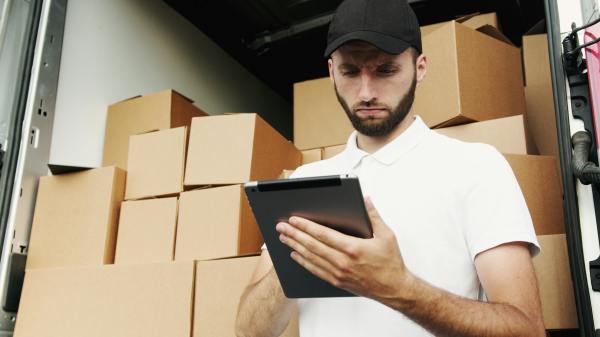
Specifically, this solution allows the remote expert to observe and analyse everything the field technician is seeing, guide the operator in the execution with specific instructions applied directly to their field of vision, digitise maintenance and inspection, and digitise logistics or order preparation processes.