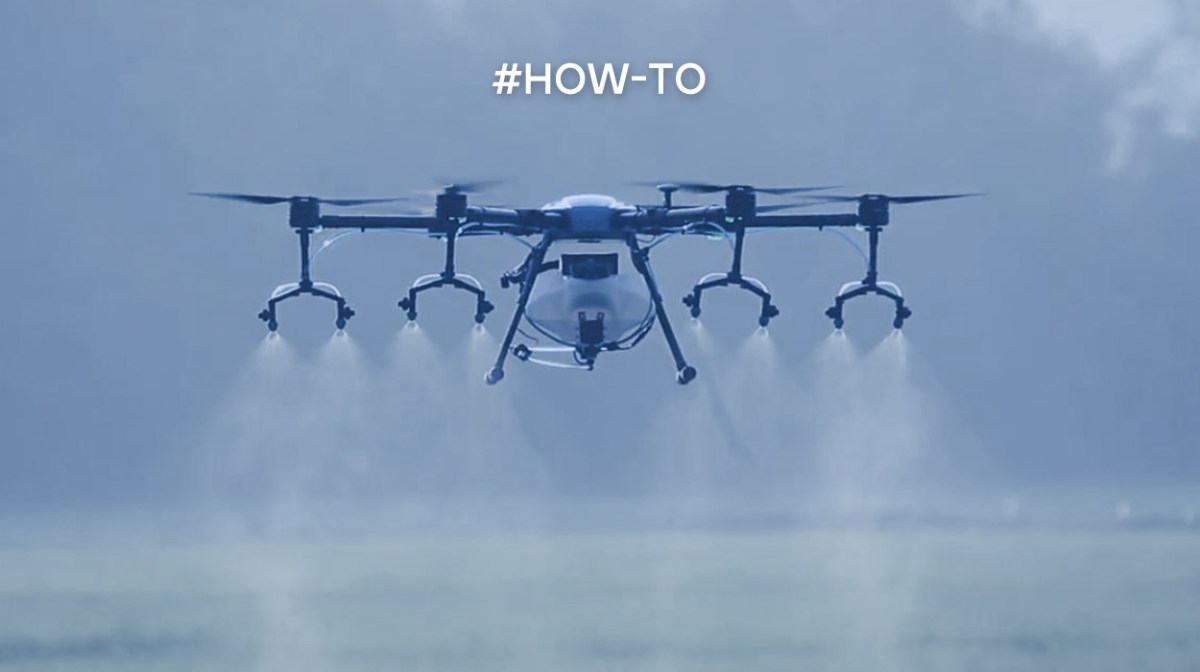

I would say that drones will cease to be ‘a flying gadget’ and become critical infrastructure, just as a mobile network or a fleet of lorries is today. In the first interview, we talked about three main areas: greater autonomy, greater connectivity and greater intelligence, and this remains the case, but at an increasingly rapid pace.
We will see drones that not only perform a specific task, but are integrated into continuous operations: patrolling forests to detect fires, inspecting infrastructure every day, delivering medical supplies or assisting in precision agriculture in near real time. And all of this coordinated from control centres where an operator manages entire fleets supported by AI, rather than a pilot with a drone in ‘artisanal’ mode.
How feasible is total drone autonomy in the short term?
Pure ‘total’ autonomy, as in science fiction, where drones make any decision without any human supervision, is still a long way off and is not desirable in all cases. But very high operational autonomy, in specific and controlled scenarios, is already technically possible and is being tested in some cases.
Today, we can already programme routes, define work areas, automate take-offs and landings, and even allow the drone to react to certain unforeseen events such as wind, obstacles or route changes. What is setting the pace is not so much technology as regulation and social acceptance: we can do more than what is currently permitted by regulations in general.
How does regulation relate to this autonomy of drones?
The relationship is total: without adequate regulation, there is no operational autonomy possible, especially when we talk about flying over people, in cities or sharing space with aeroplanes and helicopters. In Spain, as we mentioned in the first interview, AESA follows the European framework and distinguishes categories according to risk, and that determines the level of autonomy you can apply.
For a drone to operate in a highly autonomous manner, you need to demonstrate that the system is safe, that you know how to manage failures, that you have clear procedures in place and that you can mitigate risks on the ground and in the air. That is why ‘specific’ category authorisations, standard scenarios and risk assessments are so important: they are the bridge between what technology can do and what society is willing to accept.
What are the pros and cons of this autonomy?
The pros are enormous. Autonomy allows for scaling: going from one inspection per month to one inspection per day without increasing staff tenfold. It also reduces risks: fewer people climbing towers, entering dangerous areas or travelling hundreds of kilometres.
But there are cons and risks that must be taken very seriously. One is technological risk: more autonomy means more dependence on software and cybersecurity, and any failure can have a physical impact. Another is social risk: if citizens perceive that drones are ‘flying alone’ over their homes without clear guarantees of privacy and security, rejection can slow down very valuable projects.
That is why I believe that the reasonable model is to talk about supervised autonomy: a lot of decision-making capacity in the drone and on the platform, but always with human capacity to supervise, audit and take control in critical situations.
Another future feature of drones is the increase in those that operate beyond visual line of sight, BVLOS. How important is this type?
In the first interview, we talked about the major limitation of the VLOS model, which is ‘always seeing the drone’. As long as you are required to keep the drone in sight, you are limited to very small radii of hundreds of metres or, with luck, a kilometre: that’s fine for certain tasks, but not for inspecting a 50 km high-voltage power line or monitoring a large forest.
BVLOS flights, beyond visual line of sight, are what make drones a truly useful tool on a large scale, because they allow you to cover long distances and manage fleets from remote control centres. And this is where technologies such as 5G, which we are working on at Telefónica, are key: you need real-time video, low latency and robust connectivity so that the operator has ‘eyes and hands’ on the drone, even if it is hundreds of kilometres away.
What challenges do you face?
There are technical, regulatory and operational challenges. Technically, you have to ensure that connectivity is not interrupted, that the drone detects and avoids obstacles, and that it knows what to do if it loses connection or if the environment changes. From a regulatory point of view, you need clear frameworks for sharing airspace with manned aviation and for protecting the privacy of the people you fly over.
Operationally, the challenge is to move from ‘one pilot, one drone’ to models where an operator can supervise several drones without compromising safety. This requires the development of new fleet management tools, new procedures in control centres and also new skills in the teams.
What role will the integration of AI and Big Data play in the future of drones?
AI and Big Data are, in fact, what make drones much more than just flying cameras. A drone generates enormous volumes of data: video, multispectral images, position information, telemetry… If you just store them on a disk, they don’t add value; if you analyse them with computer vision and machine learning algorithms, they become decisions.
In the first interview, we gave examples: a drone that flies over a forest and detects a possible fire early on, or that inspects crops and distinguishes between a lack of irrigation and a specific pest to recommend a specific treatment. For that, you need three things: the drone must be able to send data in real time, there must be processing capacity (in the cloud or at the edge), and you must have AI models trained with quality data.
At Telefónica, we see drones as just another node in a connected ecosystem: they integrate with IoT sensors, 5G networks, analytics platforms and customer business systems. The value is no longer in ‘having drones’, but in being able to orchestrate all these elements to solve real problems in industries such as energy, agriculture, logistics and public administration.