
As individuals become more dependent, we have services such as telecare, which allows people to continue living in their homes for longer. And once they reach a state of greater dependency and need to move into a care home, we also have to digitise and provide services to care homes… all with the aim of making social and healthcare resources more efficient.
How important is telecare in caring for people?
Telecare allows our elderly to continue living independently in their own homes for longer, in their familiar surroundings, as it provides immediate protection and security. Both they and their families have greater peace of mind because they know that, in the event of any problem, the person will be taken care of.
Fortunately, telecare is no longer just a matter of pressing a button in the event of an emergency.
Telefónica success story in Andalusia
Thanks to the sensors we are deploying in more than 50,000 homes throughout Andalusia, we can detect whether or not there is movement in the home or if the elderly person has not left the house for some time, which allows social services to act even if there has been an incident and, for some reason, they have not had time to press the button, for example, in the event of a fall or fainting.
What’s more, the regional government takes care of the installation, so users don’t have to do anything except agree to have it installed in their home.
All of this is done with the utmost privacy for the individual, as we are not talking about cameras or any kind of intrusion, only sensors that detect whether or not there is movement in a completely reliable and safe way for the user.
Use of Artificial Intelligence in telecare
An example of innovative technology is the use of Artificial Intelligence in our telecare service. Through the data we collect from a seat sensor or a sensor on the door of an elderly person’s home, Artificial Intelligence could detect that this person is spending more time on the sofa or leaving the house less often, which is obviously not good for them. At a certain point, the telecare platform, realising that these habits are changing, it would trigger an alert to social services without a specific fall alarm being triggered, for example, which is what we are used to in traditional telecare, and we would be able to act and help that person before their sedentary lifestyle leads to a more serious situation.
In this case, the technology collects user data through devices connected to telecare protocols and IoT connectivity, stores it in our Cloud and then applies AI to it.
Although better known as a telecommunications operator, Telefónica is also one of Spain’s largest technology providers. We have been putting technology at the service of society for years, helping to digitise different services and industrial sectors, including social services and healthcare, to increase their efficiency.
We have already developed new ways of using technology to solve problems, with solutions based on Artificial Intelligence, Cloud and Big Data, IoT… and providing innovation to modernise care for people: ultimately, it is about finding the best way to improve care by making the most efficient use of the resources available to the administration.
Unwanted loneliness
We already know that unwanted loneliness is one of the major problems in our society, and it has been proven that it can be as dangerous to health as obesity or smoking 15 cigarettes a day. The fact that countries such as Japan and England have a Ministry of Loneliness makes us realise the extent to which this is a challenge in our society.
To detect unwanted loneliness and prevent it from developing into a chronic condition, we have a project in which a virtual assistant calls our elderly citizens to check whether they are lonely, asks them a series of questions and, depending on the outcome, decides whether the person needs support or not, so that social workers can intervene before it becomes chronic and degenerates into a more serious situation or even an illness.
In this way, social services only intervene in cases where it is really necessary and can focus on those who need it most.
It is very important to intervene in these situations, as feeling lonely accelerates deterioration, not only mentally but also physically, which means that these people reach a state of dependency sooner.
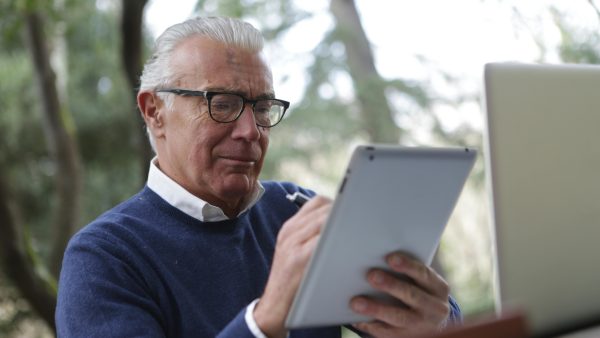
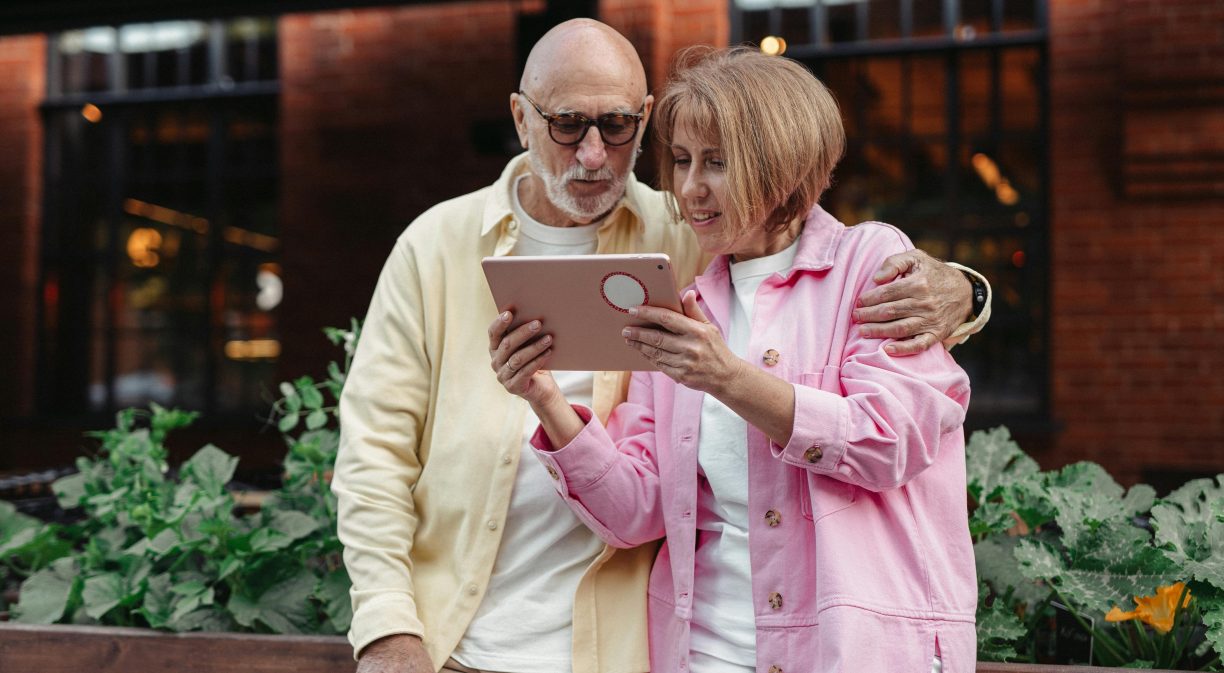
Thanks to the tablets that the Andalusian Regional Government has distributed to more than 40,000 elderly people, they are now more connected and could be provided with content with applications to combat unwanted loneliness, allowing them to contact other elderly people in the same situation and thus feel less lonely, or also with games for physical and cognitive stimulation, which is so important at this stage of life.
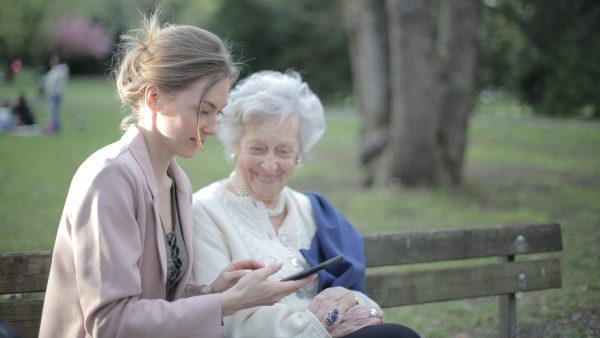
It is also very important to move from telephone support to audiovisual support, either through tablets or a television platform.
We have a platform to accompany older people in their homes, which they can use as another channel through which they can video conference with their relatives or social services… who call them on the telly, and they love it, as well as having a reminder calendar, for example, for medical appointments or a section where they can see photos uploaded by their relatives, such as photos of their grandchildren, for example, which they also really like.
Thanks to remote patient management, we have a tool that will revolutionise the care of older people, especially those with chronic illnesses or reduced mobility, as it allows us to continuously monitor key vital signs, such as blood pressure, glucose and heart rate in real time, using connected devices in the home, and the doctor can only intervene if a problem is detected.
In this way, care becomes more proactive, personalised and focused on each individual.
We were pioneers in implementing this service at the Virgen del Rocío Hospital in Seville, achieving a 50% reduction in emergency consultations for monitored patients.
Furthermore, with a telemedicine service, we can connect with patients from their homes without them having to travel to a medical centre.
Imagine how easy it is to monitor these patients and how efficient it is for healthcare professionals, given the current overload in the system.
And let’s not forget genomics and personalised medicine: thanks to our technology, we collect biomedical data from individuals and, once stored in the cloud, we analyse it and deliver useful information to doctors, enabling them to make decisions more quickly and personalise treatments for patients, offering the most appropriate treatment for each individual, improving its effectiveness and increasing people’s quality of life. To do this, it is crucial to generate secure and efficient data sharing dynamics with data spaces that allow for governance.
In the healthcare field, it is also very interesting, although it may seem contradictory, how technology can help us to humanise professionals with the development of virtual assistants for doctors. How many times have we gone to a consultation and the reality is that the doctor does not look at the patient? If we have a five-minute consultation, the doctor looks at you for one minute and spends four minutes on the computer.
Today, we have tools based on artificial intelligence that allow us to have a consultation with the doctor in front of the patient. The tool records the conversation and is able, based solely on that conversation, to generate the medical report and the treatment plan. It is amazing how, thanks to technology, doctors will once again look the patient in the face and the person will feel that they are being listened to.
Cybersecurity is absolutely strategic in telecare services, as sensitive data from thousands of Andalusian citizens is managed. Our technologies are implemented securely and data is always protected.
Thanks to the use of 5G and Edge Computing, with its ultra-low latency, we can offer robotics services, rehabilitation with virtual reality glasses, and even avatars.
Social Robotics can be applied both for companionship and for physical or cognitive rehabilitation. This technology can help solve the shortage of professionals and telerehabilitation projects, in which robots help patients by instructing them on the movements they should make, or simply by playing games with children with disabilities, which may be very relevant in the future.
We have also developed virtual avatars that, powered by Artificial Intelligence, can reproduce human functions and are capable of holding a natural conversation with a human being, which can help in lonely environments.
In addition, another use of 5G is that 112 emergency communications can make use of the network with dedicated resources by relying on Network Slicing. This is a pioneering initiative in Europe and a clear example of how technology and innovation are being put at the service of people, with the aim of facilitating and streamlining critical operations.