
Observe to understand
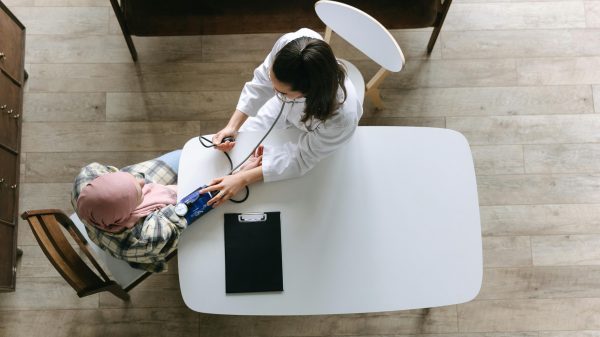
That experience reminded me why ethnographic observation is one of the most powerful—and yet most underrated—tools in experience design, especially in highly complex contexts such as healthcare. Seeing up close how professionals interact with technology, with protocols and with each other allows us to discover an invisible layer of real functioning: what happens between the system we call formal and actual, everyday practice.
What we see when we really observe
During my observation in the hospital’s medical imaging department, I was able to verify something that designers know but can rarely prove with evidence: healthcare technology does not exist in the abstract.
What you observe when you spend hours alongside a professional are not just processes: they are micro-decisions, adaptations and small gestures that sustain the real working system.
You detect how technology influences clinical communication, how digital flows can accompany—or interrupt, even delay—concentration, and how everyday practice is full of invisible intelligence that no system captures.
That tension between what is designed in a product department and what is experienced is precisely where ethnography adds value. Because design—especially in the healthcare sector—must be created with a deep understanding of the real context of use.
The ethnographic gaze as a design tool
Observing with intention changes the way we design.
Ethnographic observation does not seek to validate hypotheses, but rather to discover what we do not yet know we need to see. In a hospital, in this case, that meant: why does the flow of appointments sometimes fail; why is a tool avoided; and how does the quality of an interface condition the quality of a diagnosis?
Only when you understand the context from within do solutions cease to be created based on assumptions and begin to be created based on empathy informed by reality. That is the difference between a product that is used because it is imposed by management or legislation and one that is naturally integrated into everyday life.
From the hospital to the classroom (and back to the hospital)
I try to bring that field experience to my daily work as a lecturer in the UX Master’s programme, where I teach the theory and practice of participant observation.
I always explain to my students that observing is not just looking, but being present with sensitivity and method. I invite them to train the attention that distinguishes a good researcher: the kind that detects nuances, contradictions and improvised solutions. The latter are of great value as they are invented by the people involved to make their daily lives work, and in most cases have the essence to create a great solution.
I tell them that when you are in a hospital — or any real environment — you realise that the best design ideas do not come from brainstorming, but from good silent observation.
And that the ability to look with empathy and rigour is probably one of the most human skills we can teach in times of artificial intelligence.
Looking to understand the health of the future
In the midst of digital transformation, with AI, digital twins and predictive systems redefining healthcare, we need more than ever professionals who are able to observe before intervening.
Ethnographic observation does not belong to the past: it is a technique for the future.
Because behind every flow, every protocol and every technology, there are still people who interpret, adjust and sustain the system from a human perspective.
From my experience — both at Telefónica and in hospital corridors and classrooms — I believe that observing with an ethnographic eye not only changes how we design, but also how we understand health, technology and the value of being present.