

I’m not just talking about choosing the fastest route on the satnav or the perfect song to cheer us up on a grey morning. The latest report from Plan International, Así hablamos: las voces de la adolescencia (This is how we talk: the voices of adolescence), based on more than 3,500 surveys, reveals something more profound: many young people in Spain consider AI to be their most reliable source for answering important questions, even those that affect their academic future, their health or their personal relationships.
This made me reflect on a global phenomenon: a growing emotional and cognitive dependence on systems that, although powerful, are neither human nor infallible. What does this imply for autonomy, critical thinking and the ability to make informed decisions?
What does the data from the study tell us?
- 60% of boys and girls consider AI to be a second expert and impartial opinion, complementary to that of their families or friends.
- 30% use it for important decisions such as choosing between sixth form or vocational training, starting a diet or resolving conflicts with friends.
- 1 in 5 girls share personal details with AI, and over 80% fear that their image will be used to create fake sexual content.
- 43% use AI to manage everyday problems, including replying to messages and avoiding social arguments.
- Only 38% recognise that AI can be biased, revealing an almost naive trust in its supposed neutrality.
And the testimonials speak for themselves:
‘I asked it how to resolve a conflict with my friend and it explained everything to me; everything is fine now.’ (anonymous, 15 years old)
‘Two years ago, I was going to go to sixth form or vocational training… and I asked it which was more beneficial for me. It helped me decide.’ (anonymous, 17 years old)
For many teenagers, AI is ‘someone who knows everything’, ‘my most reliable source’ and, above all, a refuge from the fear of judgement they perceive in their family and social environment.
Why do they trust AI so much?
The answer seems simple: AI does not judge, does not get angry and is available 24/7. And in a world where everything is immediate, it becomes a fast track to resolving doubts without exposing oneself to criticism.
But this trust poses risks:
- Emotional dependence and loss of autonomy: if we let an algorithm think for us, what happens to our ability to reason and make mistakes? What happens to our ability to think critically?
- Invisible biases: the perception of impartiality is misleading; algorithms also have biases.
- Family divide: AI can widen the natural distance between parents and children, replacing dialogue with automated responses.
Gender gap and digital vulnerability
The report warns of social tensions:
- More than 80% of girls fear the misuse of images to create fake sexual content.
- 72% of boys express fear of being unfairly accused of gender-based violence, while girls support equality and protection policies.
AI does not resolve these tensions, but it does influence how they are experienced and managed. It acts as a silent mediator, present in more decisions than we imagine.
As a mother, what worries me?
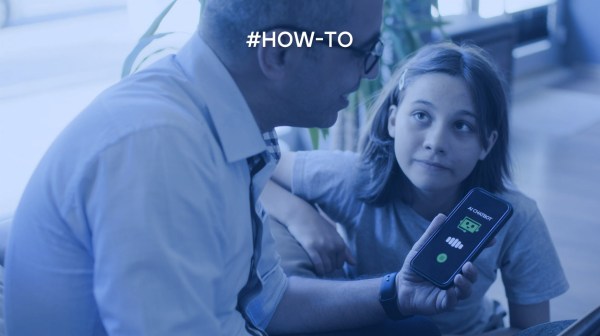
I admit it: this report worries me. I am concerned to imagine that my daughter, in a moment of doubt or vulnerability, would prefer to ask a machine rather than me. That AI would become her confidant for managing relationships, emotions or life decisions. Because if human dialogue is replaced by an algorithm, what room is left for empathy, learning and family bonds?
Adolescence itself is already a stage that pushes children to distance themselves; AI can turn that distance into a wall. Suddenly, parents become ‘the enemy’, relegated to the role of ‘those who don’t understand’, while important conversations move to a screen. And that’s where the key question arises: how do we educate so that technology is a tool, not a substitute for family dialogue?
The challenge: educating in critical thinking
I have said it many times and I will say it again: it is not about demonising technology. AI has obvious advantages: it helps with studies, offers instant information and can be a support. But we must teach our children that AI does not decide for them. That deep trust is built on real conversation, with nuances, with silences, with looks.
As a society, the challenge is twofold:
- To educate in digital ethics and personal autonomy.
- To create spaces for dialogue where technology complements, rather than replaces, human relationships.
Because if we don’t, we run the risk of raising a generation that trusts a chatbot more than the advice of their parents.