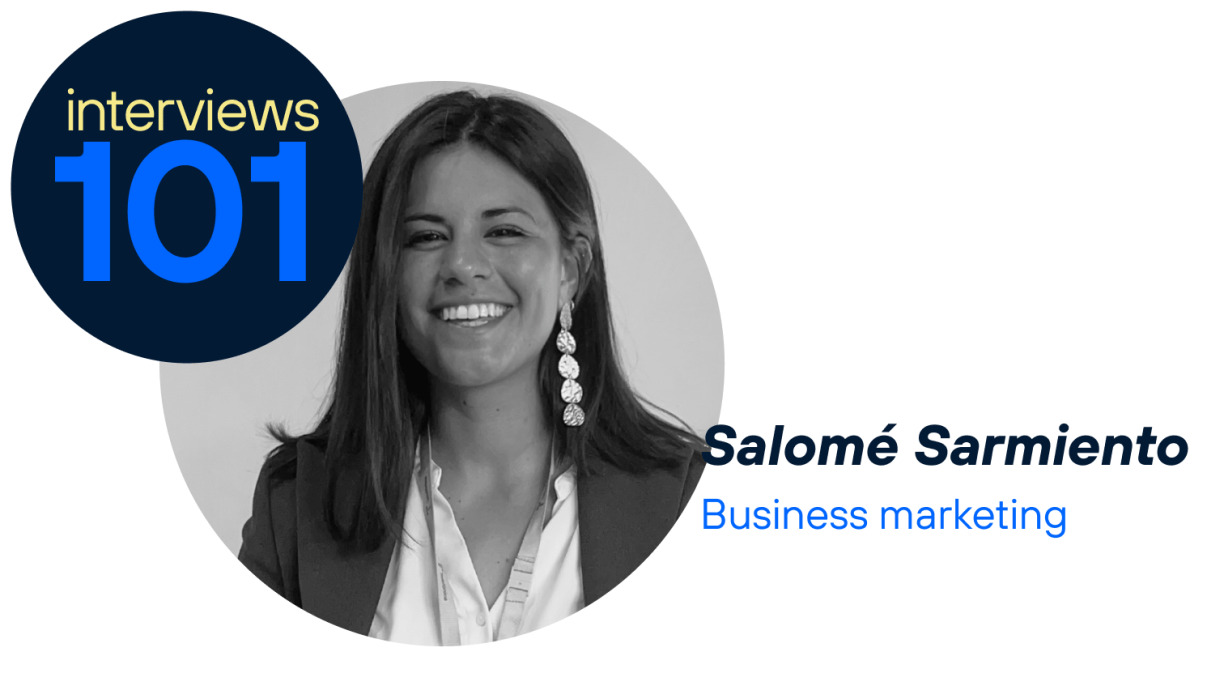

Tell us a little about yourself. What does your job at Telefónica involve?
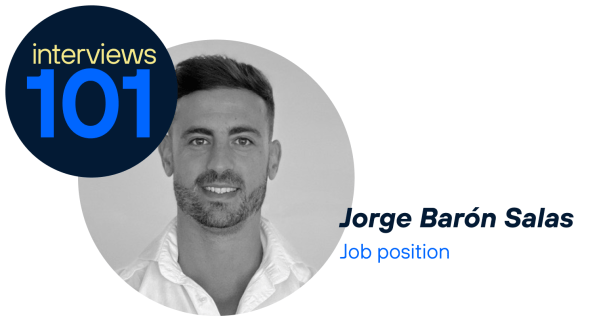
I have been working at Telefónica since June, after spending a year as a Talentum intern, and being able to join officially is a dream come true. Every day I learn something new and feel that I am growing a lot, both personally and professionally.
I have a degree in Industrial Engineering from Francisco de Vitoria University and I also had the opportunity to study Mechanical Engineering in the United States, which gave me a very practical and international perspective on engineering. But, honestly, I think what defines me most is not my education, but my Christian faith, which drives me to live every moment with enthusiasm, responsibility and a desire to always give my best. I try to show this in how I work and how I face challenges, always with a smile on my face.
I am now part of the Business Development and Product Management area, where I work on Telefónica’s new drone service: a Drone-as-a-Service model that combines 5G connectivity, artificial intelligence and advanced analytics. My role is to help drive its technical and operational development and turn it into a real, scalable solution for customers.
How would you define the work of a business development and product management manager?
I would say it is the connection point between technological innovation and business strategy. Our role is to identify new opportunities, understand the real needs of the customer and transform them into viable products or services.
Ultimately, it’s about translating technology into value, ensuring that each development makes sense both technically and economically, and that it responds to a specific market problem.
What are the benefits of combining these two tasks in one person?
Combining business development and product management provides a comprehensive and coherent vision. It allows you to move faster because you understand both what the market needs and what the technical team can build.
This dual perspective helps you prioritise effectively, reduce decision-making times and stay focused on what is important: creating something that works, that can be sold and that really adds value for the customer and benefits the company.
In what ways are they complementary?
They are completely complementary because one focuses on identifying opportunities and the other on making them a reality.
For example, when we identify a need, such as improving infrastructure inspection or forest surveillance, we work on the technical architecture, the partners we need to work with, and the commercial proposal.or example, when we identify a need, such as improving infrastructure inspection or forest surveillance, we work on the technical architecture, the necessary partners and the commercial proposal.
Business development paves the way and product management consolidates it, ensuring that the idea reaches the market with guarantees.
What are the main characteristics of this job?
It is a very cross-functional and dynamic position, in which you have to constantly connect with different areas: engineering, marketing, operations, innovation…
It requires an analytical but also creative mindset, a great deal of adaptability and a strategic overview. It also involves being close to the customer, understanding their processes and knowing how to translate needs into specific technical solutions.
What advantages does the development of new technologies bring to this professional profile?
The development of new technologies is completely transforming the way products are created and managed. In my case, working with technologies such as 5G, artificial intelligence and edge computing allows us to move from a concept to a real service in a very short time.
These tools make it possible to offer more autonomous, secure and efficient solutions, such as remotely operated drones or systems that analyse video in real time.
For those of us who work in business and product development, it is a great advantage to be able to rely on this innovation to turn technology into tangible value for the customer and accelerate the arrival of new services on the market.
And what challenges does it present?
I think the biggest challenge is finding the balance between innovation and execution. Sometimes we have very ambitious ideas, but turning them into something real takes time, coordination and a lot of patience. It’s not enough to design a disruptive concept: you have to test it, validate it with customers, adapt it to regulations and make sure it can be scaled up without losing quality or security.
It’s also a challenge to coordinate such different teams, because the same project involves technical, commercial, operational and even legal profiles, and we all have to row in the same direction. Added to that is the fact that the environment is constantly changing: technology is advancing, regulations are evolving and the market forces you to move quickly.
But that’s the best part of the job. Every day you learn something new, face different situations and see how what started as an idea becomes a real service that adds value. It’s a constant challenge, but that’s also what makes this job so stimulating.
Which people working at Telefónica would you nominate for this interview who you consider to be excellent at their job?
Tomás Enrique Varela and Juan Carlos Rosales Medina.