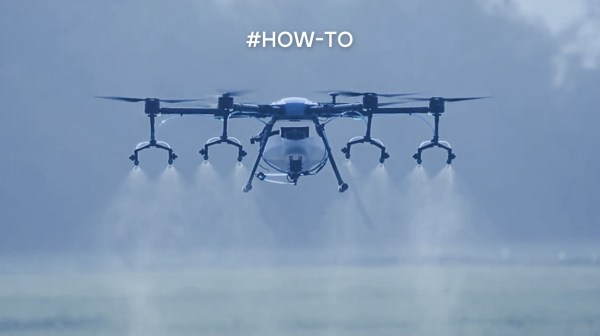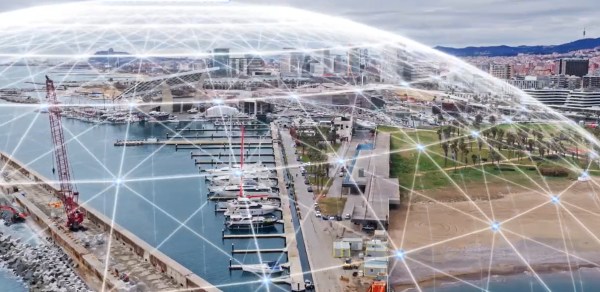

The first thing we need to explain is how most drones are controlled today. The pilot usually has a remote control that communicates directly with the drone via radio frequency. This means that the furthest the drone can be from the pilot is the range of the radio link between the remote control and the drone. This range is usually from a few hundred meters to a few kilometers, always depending on the terrain, since if there are mountains, obstacles, or tall structures between the pilot and the drone, the range will be reduced. Connecting the drone and pilot via 5G radically changes the scenario, since communication is not established via a direct radio link but via the 5G network. In this way, the drone can travel by “jumping” from 5G cell to cell for miles without losing connectivity, just as our cell phones do during a road trip. In addition, the pilot can be located anywhere, even hundreds or thousands of kilometers away from the drone, as 5G communication has very low latency and the distance between the pilot and the drone does not matter.
The concept of a “drone nest”
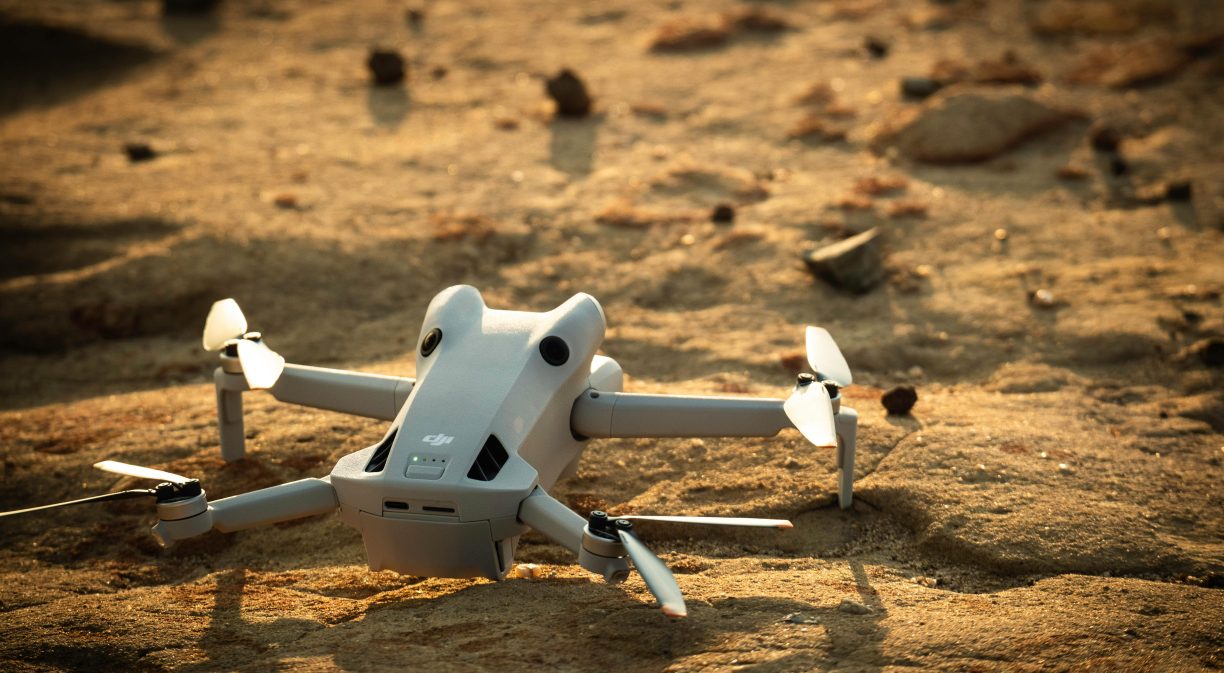
The drone nest is a kind of mini hangar for these aircraft. This box is located outdoors, stores the drone, and charges it. To operate, it only needs power and 5G connectivity. To start a flight, the remote pilot commands the box to open, initiates the drone’s takeoff, and directs it to where it is needed, transmitting control and images via 5G. The pilot can initiate a preconfigured flight or operate the drone in real time. Once the drone flight is no longer necessary, the pilot initiates the “return home” command, the drone flies back to its origin, the box opens, and the drone lands precisely. Once landed, it stops its engines, the battery charge is established, and the box closes, leaving the drone charging until the next flight.
The advantages of being able to operate drones remotely
Having drones in a box connected to 5G in strategic locations gives us a great advantage over traditional drones. To fly to a specific point and view images of the area in real time, it is not necessary for a pilot to travel to the area and fly it from there. Instead, as explained above, the drone can begin its flight in a matter of minutes. This is vital, for example, in emergency situations.
On the other hand, there is efficiency in recursive operations. Imagine that we want to control a perimeter with surveillance rounds to prevent intruders from entering, or that we want to fly a drone several times a day in search of fire outbreaks in a high-risk area. A person would have to be in the flight zone all day, making the first flight in the morning and waiting until the next one. With the drone-in-a-box solution, our drone pilots can handle different missions one after another throughout Spain without having to travel and without hours of downtime between flights.
Success story
Given the dramatic forest fires that occurred this summer and which, unfortunately, we have every summer in Spain, we decided that this would be one of the first use cases we would work on, especially in the area of prevention. In these scenarios, there are two ways to work. The first is early fire detection, with routine flights over predefined areas once or several times a day in search of heat sources. To do this, our drones are always equipped with thermal cameras. The second is in the initial response to a possible fire at a specific location. When a citizen calls 112 to report a possible fire, the fire brigade calls Telefónica to launch the drone. Within minutes, the drone takes off and flies to the location indicated by the citizen, transmitting the first images of the fire to the fire brigade via 5G. With this rapid response, the fire brigade determines which personnel to send to the area and decides whether the drone should return to base or remain to monitor the fire.
This solution is an ideal complement to the current resources available to forest fire brigades. In areas at high risk of fire, a helicopter is usually available. The use of a drone as a complement to the helicopter, being a more economical and sustainable system, means that more calls about possible fires can be responded to. Furthermore, helicopters cannot fly at night, but drones can, so we can carry out night-time monitoring of the fire with drones. Finally, we must not forget that fires also occur in winter, and these helicopters are usually only available in summer during the months of highest risk. Drones in a box can complement helicopters in the months when they are not operational.
The main applications of drone in a box today
The first use cases we are considering with this drone in a box solution are early detection and firefighting and perimeter security for critical infrastructure.
In 2026, we will be working on road and infrastructure inspection, transport of urgent materials such as defibrillators, gas detection, and semi-urban and urban flights.
The main applications of drone-in-a-box today
The first use cases we have tested this year with this drone-in-a-box solution are early detection and firefighting and perimeter security for critical infrastructure. We have four customers for whom we have installed different drone-in-a-box solutions, and they will be the first to use this service.
By 2026, we will be working on road and infrastructure inspection, transport of urgent materials such as defibrillators, gas detection, and semi-urban and urban flights.
The future of drones
I believe there are several trends that will shape the future of drones in the coming years:
- Long-range flights with remote pilots, meaning that pilots can be located tens or even hundreds of kilometers away from the drone they are controlling. This can be achieved thanks to 5G and its low latency.
- Automation. An increasing number of flights will be autonomous thanks to programmed routes and artificial intelligence to assist with flight. Currently, regulations do not allow autonomous flights; there must always be a pilot in charge of the mission. However, this will change in a few years when drones demonstrate their reliability and ability to manage unforeseen events autonomously.
- Digitization and real-time airspace management for drones. The U-space initiative in Europe consists of creating digital platforms that manage low-altitude airspace for drones. Drones within a U-space volume will be able to reserve a specific area for flight, must be identified, and transmit their position, speed, heading, etc. in real time. To create these flight volumes, 5G will be essential for the in-flight transmission of this data in real time.
- Greater autonomy. Drones, like all electric vehicles, are limited by their batteries. Work is already underway on solid-state and semi-solid batteries that can not only store more energy but are also safer. On the other hand, work is already underway on solar-powered drones, and fixed-wing eVTOL (Electric Vertical Take-Off and Landing) drones are already commercially available. These drones take off vertically using rotors but have wings for lift during cruise flight, which significantly reduces consumption and allows them to fly for hours at a time.
- Onboard sensors. Drones are now available with 4K cameras, thermal cameras, LIDAR (Light Detection and Ranging), multispectral cameras, gas detectors, and even sound level meters and radiological and chemical detectors. The future in this regard is to continue expanding these sensors in line with hundreds of different use cases, but also to reduce their costs and make them more compact. All of this will be integrated with artificial intelligence platforms that allow automatic results to be obtained from the data collected. Imagine a drone that has been flying for hours; we can ask the artificial intelligence to analyze all the video and tell us where to find what we are looking for.
- Freight transport. The first steps in making this type of flight viable will not be the widespread transport of Amazon-type packages, but rather the urgent transport of medical supplies (laboratory samples, blood, plasma, defibrillators), transport to sparsely populated areas that are difficult to access, and intralogistics within a port, an industrial park, or within a single factory.
- Urban flights. Flights in more densely populated areas will depend on two factors. The first is the reliability of the aircraft. Little by little, drone manufacturers are obtaining more complex safety certifications that guarantee that their systems are robust and do not fail. As they obtain these certifications, regulatory agencies, in the case of Spain AESA (State Aviation Safety Agency), will gradually allow this type of flight. On the other hand, in flight scenarios where a high concentration of drones is expected, such as in cities, the U-space volumes mentioned above must be defined to allow air traffic to be managed in complete safety.
The daily life of citizens
Firstly, drones will become a complementary tool in many existing professions. We have already mentioned the case of firefighters, but they will also help in emergency work, infrastructure inspections, security, accident prevention, etc.
Beyond the professional sphere, citizens will begin to notice direct changes in their daily lives. For example, emergency response times will be faster: a drone will be able to arrive before a human team to assess an accident, locate a person in a remote area, or transmit real-time images that allow for more precise action. This will translate into faster and more efficient public services, greater incident response capacity, and reduced risks for professionals working in hazardous environments.
We will also see how some common services such as road inspections, surveillance of natural areas, or even the urgent delivery of certain products will be carried out more punctually and with less environmental impact, thanks to the use of electric and silent drones.
In urban areas, drones will contribute to improving city management: real-time traffic control, early detection of incidents on public roads, faster management of breakdowns, and inspections of key infrastructure without the need to close streets or cause disruption. All of this will result in fewer interruptions and smoother mobility.
There will also be benefits in everyday life in terms of sustainability and reduced environmental impact. Many tasks that currently require heavy vehicles, long journeys, or repetitive manual labor will be able to be done with electric drones, reducing noise, emissions, and costs.
And, although many of these operations will be virtually invisible to most people, their effect will be felt in safer, better-managed, more sustainable cities with more agile and personalized public services.